
Baird’s tapir: the silent giant of Costa Rica’s forests
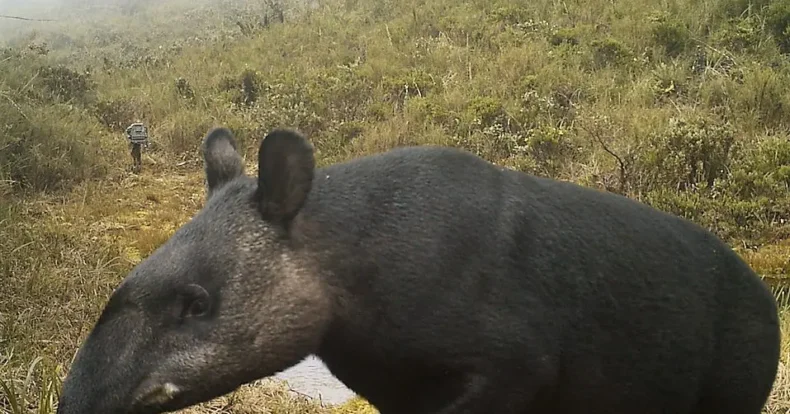

Baird’s tapir, also known simply as tapir. It is enormous, with a long nose like an elephant’s, loves water, and is capable of whistling.
The Baird’s tapir (Tapirus bairdii), also known as the Central American tapir, is the largest land mammal in Central America, nicknamed the “gardener of the forest” for its vital role in dispersing seeds and regenerating the jungle. It is a species threatened by habitat loss and illegal hunting, inhabiting countries such as Mexico, Costa Rica, and Colombia, and is a “living fossil” due to its ancient evolutionary lineage.
The English name, Baird’s tapir, honors Spencer Fullerton Baird, an American naturalist who was the first curator of the Smithsonian Institution. His surname is associated with several other species, such as a rodent, a beaked whale, and a rat snake. He certainly left his mark on the history of science.
The giant of the tropical forests
Tapirs are the largest land mammals in Costa Rica. They measure approximately 1.80 meters long, reach about 1.20 meters in height, and can weigh between 180 and more than 270 kilograms. For anyone who stops to observe them closely, their size is impressive.
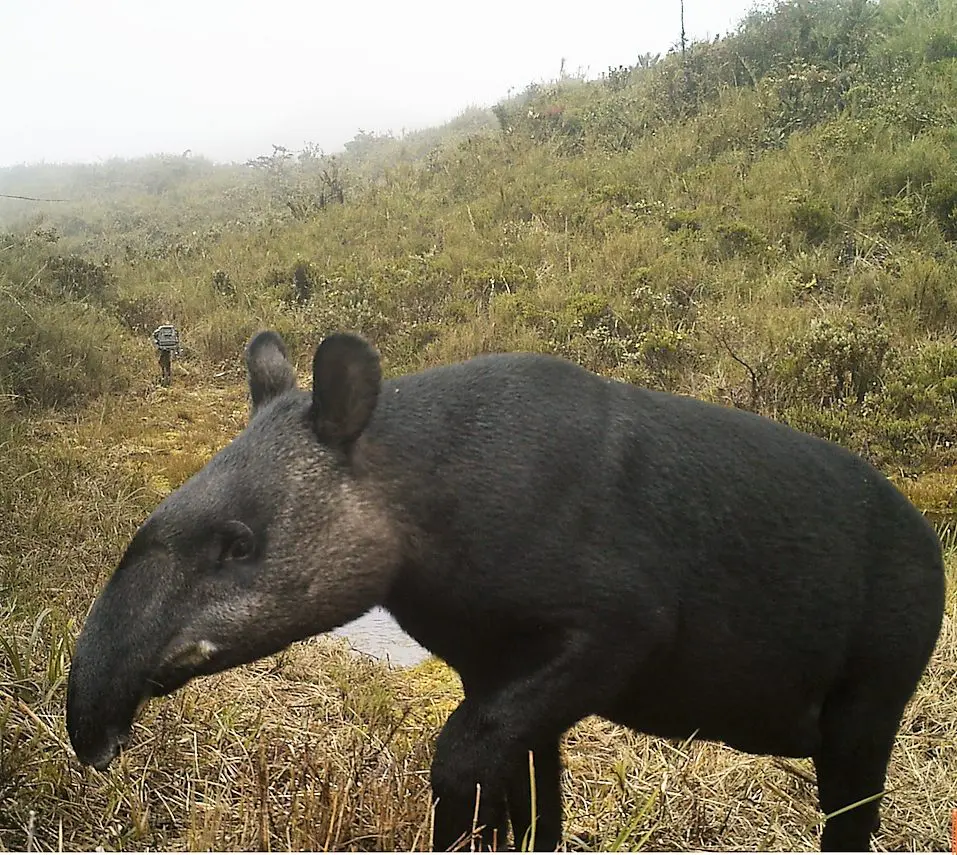
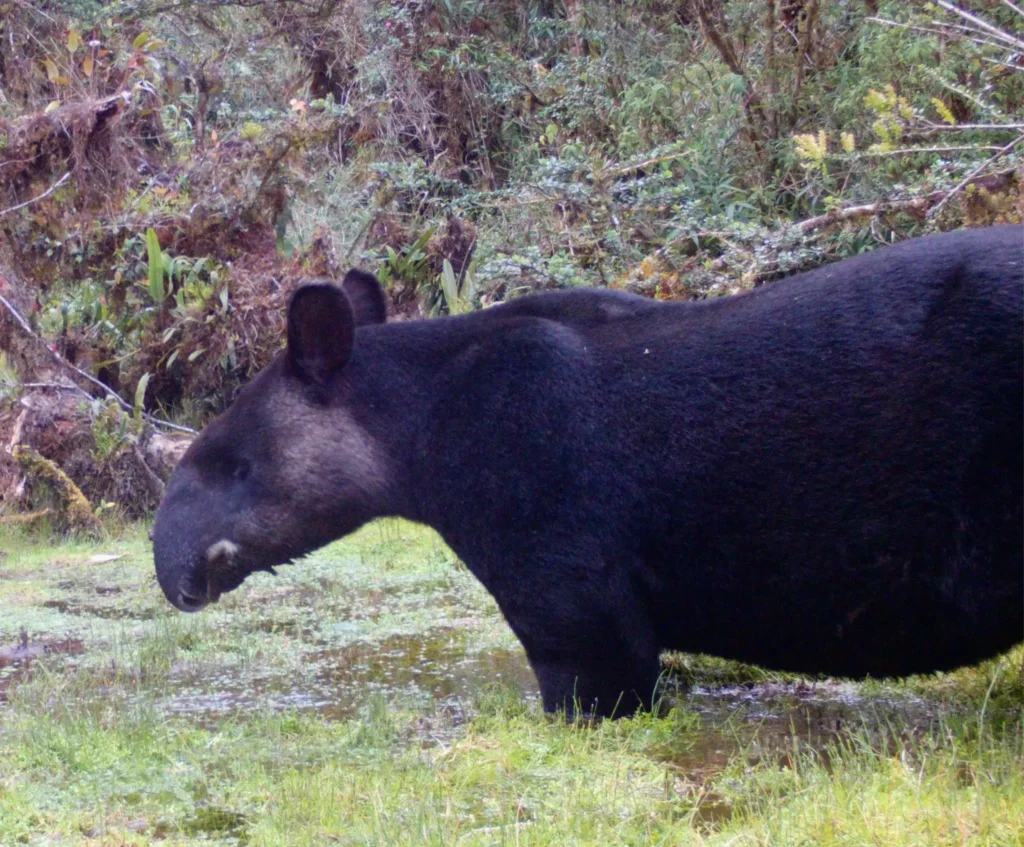
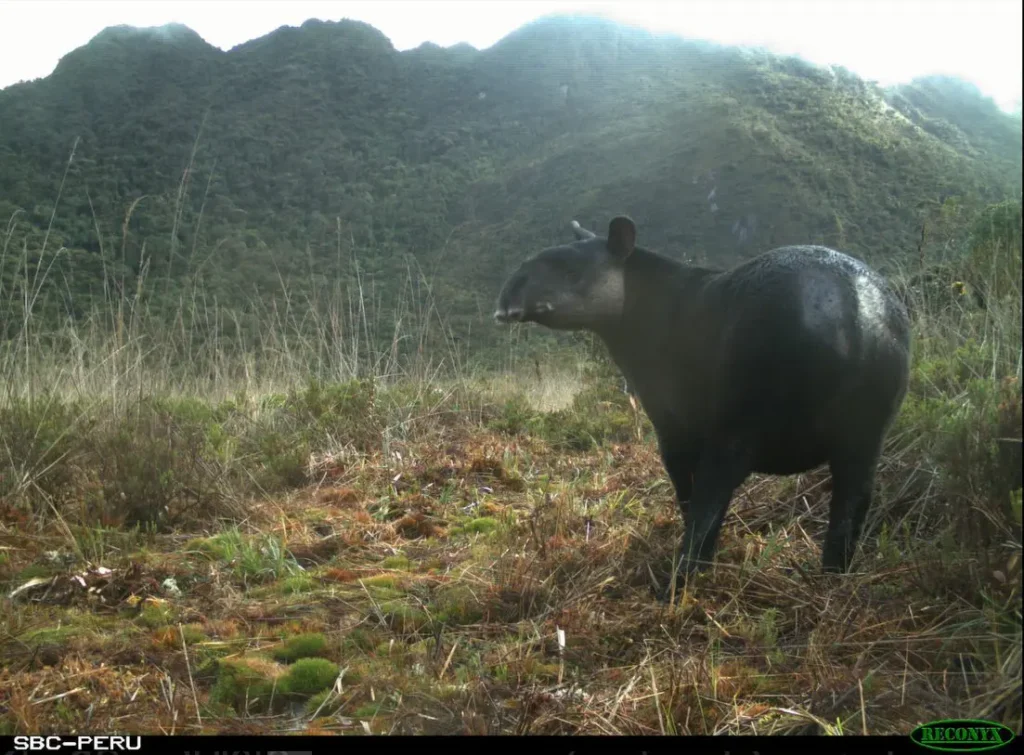
This feeling is especially accentuated when they are recorded with camera traps, since most of the animals that appear in them are usually the size of a small dog. When an animal comparable to a large pony suddenly bursts onto the scene, the difference is impossible to ignore.
A versatile nose and unmistakable feet
One of the most striking features of the tapir is its proboscis-shaped snout, a flexible, elongated nose that it uses to pull leaves, branches, and fruits. This appendage also serves as a natural snorkel when it submerges almost completely in water, as it is an animal that greatly enjoys rivers, streams, and ponds. They also use it to emit a peculiar whistle with which they communicate with other individuals.
Their feet also have a distinctive feature: the front feet have four toes, while the rear feet have three. When observing footprints in mud, however, it is common to think that they all have only three toes, since the fourth front toe does not usually leave a mark.
An adaptable species, but increasingly cornered
Baird’s tapir is a habitat generalist, capable of living in almost all ecosystems in Costa Rica, except urban areas. Although it is usually associated with rainforests, it also inhabits cloud forests and dry forests, such as those in Guanacaste.
In the past, it was distributed throughout practically the entire country, but today it is more common to find it in protected and undisturbed areas, due to habitat loss and human pressure.
A life dedicated to eating… a lot
Due to its large size, the tapir needs to spend much of its time feeding. Studies have shown that up to 70% of its active time is spent eating, consuming around 13 to 14 kilograms of food per day.
Their diet varies depending on their environment, but in general terms, approximately a quarter consists of fruit, while the rest consists of leaves, stems, and various types of vegetation. After completing the digestive process, the remains are expelled in the form of pellets similar to horse manure, which usually float in puddles or bodies of water, contributing to the dispersal of seeds.
Sensorial Sunsets
Navigate articles