

United States/Venezuela: Official reactions in Latin America to the first U.S. military intervention in Latin America in the 21st century
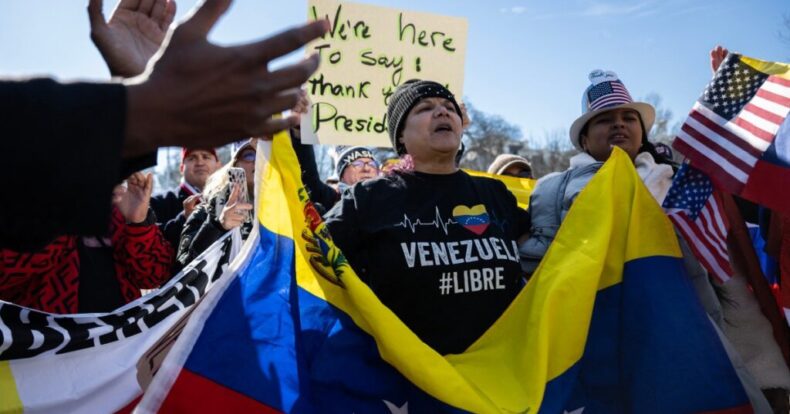

United States/Venezuela: the diverse official reactions in Latin America to the first US military intervention in Latin America in the 21st century
Nicolas Boeglin, Professor of Public International Law, Faculty of Law, University of Costa Rica (UCR). Contact: nboeglin(a)gmail.com
The military operation carried out by the United States against Venezuela on the night of January 2-3, 2026, has caused international astonishment. It included special forces, commandos launched from helicopters, 150 aircraft in support roles, and ships off the Venezuelan coast. In response, several Latin American countries have seen fit to speak out against this unilateral military action against Venezuela and its highest authority. It is also worth asking what prevented some from doing so, leaving them in heavy silence.
An analysis of official reactions in Latin America is of particular interest, given that the region is made up of sovereign states that suffered direct or indirect US military interventions during the 19th and 20th centuries, all aimed at promoting US interests in the region. Living in a region subject to this type of unilateral action or threats of US military intervention, which have marked the history and collective memory of this part of the world, is a characteristic unique to Latin America: from an international legal perspective, the only US intervention brought before international justice was related to military and paramilitary actions against Nicaragua, with a historic ruling in June 1986 condemning the United States. Will Venezuela now seek justice and compensation in 2026 before the same international court that ruled in Nicaragua’s favor in 1986?
Far from being considered a closed chapter in Latin American history, the events of January 3, 2026, indicate that this practice still has some supporters in political circles in the United States in the 21st century, and even more surprisingly, that some Latin American states do not consider it necessary to condemn it. How so? As you read.
It is worth noting that the events of early January should come as no surprise to international observers: the United States had already planned highly questionable military attacks in recent years, such as the one carried out in Iraq on January 2, 2020, against a senior Iranian official, based on information provided by the Israeli secret services (Note 1).
Immediate reactions from the United Nations
At the United Nations level, reactions were swift, starting on January 3, both from the United Nations Secretary-General and from the President of the General Assembly (see official statement from the United Nations).
The commission of inquiry into the human rights situation in Venezuela (a body created by the United Nations Human Rights Council) requested an investigation into what happened in order to ascertain the extent of the destruction and, in particular, the number of lives lost and people injured during this attack (see official statement). As is well known, Venezuela is a party to various human rights instruments, as well as the 1988 Rome Statute establishing the International Criminal Court (ICC): the recent example of Ukraine requesting the ICC to investigate abuses committed on its territory by Russia, without Ukraine being a State Party to the Rome Statute in 2022, is worth mentioning.
It is known, based on their nationality, that 32 people from Cuba died during the US attack on Venezuela on January 3 (see note from DW).
It can be expected that in the coming days, an initial vote in the Security Council will be vetoed by the United States and that the matter will then be considered by a vote of the 193 Member States in the General Assembly in the coming days, as requested by South Africa in its official statement condemning the United States (see text). Provided, of course, that Venezuela and its allies deem it appropriate to bring the matter to the attention of the members of the Security Council and then to the United Nations General Assembly.
We had the opportunity to analyze a very similar sequence (Security Council—Russian veto—General Assembly—overwhelming majority) in February/March 2022, following Russia’s military aggression against Ukraine on February 24 of that year (Note 2).
Notably, Colombia and Panama will serve as non-permanent members of the Security Council on behalf of Latin America starting January 1, 2026, with Panama being the last Latin American country to have suffered a US military intervention (1989).
The ignored warnings of the United Nations
It should be noted that long before January 3, 2025, United Nations human rights experts had strongly condemned the blockade imposed on Venezuela and the interception and destruction of ships suspected of drug trafficking with their crews on board, carried out by the United States military.
We refer our esteemed readers in particular to:
- the press release dated December 24, 2025;
- the statement of November 4;
- the statement issued by the High Commissioner for Human Rights on October 31;
- the joint statement of October 21, 2025;
- the statement issued by several experts on September 16, 2025, after the destruction of a first vessel was recorded.
Will our esteemed readers discover the existence of these official communiqués posted on the website of the United Nations High Commissioner for Human Rights, warning that these unilateral actions by the United States violated current international law, raising questions about international crimes and arbitrary and extrajudicial executions? If so, it is suggested that an investigation be conducted into what may have happened with international news agencies and media outlets that led them to largely ignore these official United Nations statements at the time.
It should be noted that Palestinian organizations are also asking themselves the same question in relation to certain statements posted by the United Nations on its official website since October 7, 2023, regarding the unspeakable tragedy unfolding in Gaza, which have received little coverage in the international press.
Current international rules that will soon be immutable
The use of force by one State against another State has been expressly prohibited in the Charter of the United Nations since 1945, as well as in the Charter of the Organization of American States (OAS) since 1948, and its prohibition has been invoked time and again by victim states and reaffirmed time and again by United Nations bodies, as well as by international courts since 1945 that have heard cases involving military actions by one state against another.
When a state has violated this rule in the recent past, it has taken pains to invoke legal concepts that do not exist in public international law, such as “preventive self-defense,” invoked by the United States in Iraq in 2003, or by Colombia in Ecuador in March 2008 (Operation Phoenix) and … pioneered by Israel in 1981 in Iraq (Note 3); or invoking the notion of “war on terror” to justify bombings in Pakistan and Afghanistan after September 11, 2001, devised by the US administration; or referring to the notion of “unlawful combatants” to send people from the Middle East who were illegally captured by the United States and sent on clandestine flights to Guantanamo to the US military base in Guantanamo, Cuba. More recently, Russia invoked a “humanitarian intervention” in Ukraine under the pretext of an alleged genocide committed against Russian populations in Ukraine in 2022. Since September 2025, the United States has sought to justify its actions off the coast of Venezuela by invoking the vague notion of a “war on narco-terrorism.” What we might call the boundless creativity of some states is due to the following fact: all states are always looking for ways to dress up the violation of the rule prohibiting the use of force as supposedly legal, as it is a fundamental norm of international law.
In effect, this rule constitutes the cornerstone of the entire regulatory framework built since 1945, as well as the principle of non-intervention by one state in the internal affairs of another state.
The unilateral action taken by the United States on January 3, 2026, further destabilizes an already turbulent region and world, confirming that for the current US president and his cabinet members, the rules in force in international law prohibiting the use of force …apply to other states.
It should be noted that since January 21, 2025, whether in the area of trade rules, immigration, human rights, respect for the principle of non-intervention in the internal affairs of another State, or in matters of respect for the principle of prohibition of the use of force or the threat of force, or more recently in matters of international norms relating to the capture and seizure of drug shipments on the high seas, the current occupant of the White House has taken pains to systematically and shamelessly violate some existing international rules in these and many other matters.
In Latin America, the last military intervention carried out by the United States in Panama, which began on December 20, 1989, and ended with the capture of General Noriega on January 3, 1990, reminds us of the temptation that the highest US authorities have from time to time to “solve” political problems in their own way (military) without achieving much success (see link to various reports produced in Panama on this 1989 invasion). This press release from 2024 indicates that investigations are still ongoing in Panama to identify the Panamanian victims, whose exact number is unknown to date.
Unilateral military action by the United States in response to an already explosive domestic situation: where is Venezuela headed?
It is worth noting that when the highest authority in the United States stated at a press conference on January 3, 2026, that the United States intends to ensure a “peaceful transition” and “market Venezuela’s oil” while this transition is confirmed, the absolute disrespect for various sectors in Venezuela is confirmed, including sectors of the political opposition.
An editorial in the New York Times—which none of our esteemed readers can accuse of being favorable to the political regime in Venezuela—on January 3 warned of the risks to the United States and its image in Venezuela, Latin America (and the world) this unilateral action (see text).
A 30-minute documentary, “From Macedonia, with Love,” made by Venezuelan human rights activists in the wake of the mass protests seen on July 29, 2025, in Venezuela, provides a fairly comprehensive portrait of the discontent felt by many sectors of the population toward the Venezuelan authorities after the official results of the July 2025 elections were announced. Now, do these same sectors all support this illegal intervention by the United States that threatens Venezuela’s sovereignty, and will they support the idea that the United States should control the production of hydrocarbons extracted from Venezuelan soil?
Not to mention the fact that experience has shown that regime change through external military intervention has exacerbated the crisis rather than resolving it, as has been seen in Iraq since 2003, Afghanistan since 2002, Libya and Syria since 2011, and Yemen since 2014.
On strictly oil-related matters, it is worth adding that Iran, when Prime Minister Mohammad Mossadegh nationalized oil extraction, was the target of a coup d’état in 1953 led by the United States to install authorities much more favorable to its interests. These were finally overthrown in 1979 by the revolution led by Ayatollah Khomeini. In mining matters, our esteemed readers from Chile and more generally from Latin America are well aware of what Chile suffered in 1973, with a coup d’état in which the United States was not uninvolved, declassifying sensitive documents little by little, the last installment being in 2023 (Note 4). In both cases (Iran, 1953, and Chile, 1973), the human rights situation deteriorated significantly, with the United States having a very different priority.
In this regard, it is worth mentioning the jubilation of some political sectors in Costa Rica and other parts of Latin America announcing the end of the current regime and the arrival of democracy in Venezuela: indeed, although the capture of Venezuela’s highest authority and his wife by the United States may have weakened the chain of command within the Venezuelan state for a few days, the existing political system quickly found a way to fill this void. Therefore, it is likely that the same regime will remain in place, particularly if the Venezuelan political opposition cannot find a way to form a common front. This makes the aforementioned rejoicing somewhat risky and brings to mind the popular Costa Rican notion of “alegrón,” which is not very legal but perfectly understandable.
There are numerous examples of political regimes that have remained in place for many years after the disappearance of their historic “leader,” despite fierce political opposition from the United States. As for the belief that the United States acted to restore democracy in Venezuela, a brief review of history shows us that the United States has other motives when it intervenes militarily.
An initial warning issued in… 2017 and almost universally rejected in Latin America
It should be noted that on August 11, 2017, this same President of the United States had stated, a few months into his first term, in statements to the press, that:
I’m not ruling out the military option. He’s our neighbor, and we have troops all over the world. Venezuela isn’t very far away, and people there are suffering and dying.
In August 2017, several Latin American countries issued official statements condemning the “military option,” ,” which we had the opportunity to analyze at the time, noting that Costa Rica did not consider it appropriate at that time to comment on the matter as many other states did (Note 5): a rather notable and conspicuous omission, and one that has been analyzed very little in Costa Rica.
Official reactions recorded in Latin America condemning the actions of the United States on January 2, 2026
Beyond the great uncertainty surrounding the acute internal crisis that Venezuela has been experiencing for several years, and which may be significantly aggravated by this US military intervention, among the various official reactions to the events of January 3, 2026, we can mention that of Brazil, which emphatically states (see official statement) that:
Os bombardeios em território venezuelano e a captura do seu presidente ultrapassam uma linha inaceitável. Esses atos representam uma afronta gravíssima à soberania da Venezuela e mais um precedente extremamente perigoso para toda a comunidade internacional.
Atacar países, em flagrante violação do direito internacional, é o primeiro passo para um mundo de violência, caos e instabilidade, onde a lei do mais forte prevalece sobre o multilateralismo.
A condenação ao uso da força é consistente com a posição que o Brasil sempre tem adotado em situações recentes em outros países e regiões.
A ação lembra os piores momentos da interferência na política da América Latina e do Caribe e ameaça a preservação da região como zona de paz“.
It can also refer to the vehement reaction of the Chilean diplomatic corps (see official statement) which points out, among other things, in a lengthy statement, which we recommend reading in full (Note 6), that:
Chile reaffirms that respect for the sovereignty and territorial integrity of states is a red line that must not be crossed under any circumstances, and that it is also an essential pillar of international law. Sovereignty is not a formality; it is the essential guarantee that protects countries from external arbitrary actions and the law of the strongest. Today it is Venezuela, tomorrow it could be any other country. Likewise, the threat of unilateral external control of natural or strategic resources constitutes a serious violation of the principle of territorial integrity and jeopardizes the security, sovereignty, and stability of all states in the region.
For its part, in its official statement, Colombia indicated that:
Colombia reaffirms its ongoing commitment to regional peace and security, the sovereignty of States, and unrestricted respect for the principles enshrined in the Charter of the United Nations, in particular the prohibition of the use of force and the peaceful settlement of disputes. The historical experience of the region, proclaimed a Zone of Peace, demonstrates that no dispute can be legitimately resolved through unilateral actions.
In its official statement, the diplomatic apparatus of Mexico specified that:
The Government of Mexico strongly condemns and rejects the military actions carried out unilaterally in recent hours by the armed forces of the United States of America against targets in the territory of the Bolivarian Republic of Venezuela, in clear violation of Article 2 of the Charter of the United Nations (UN).
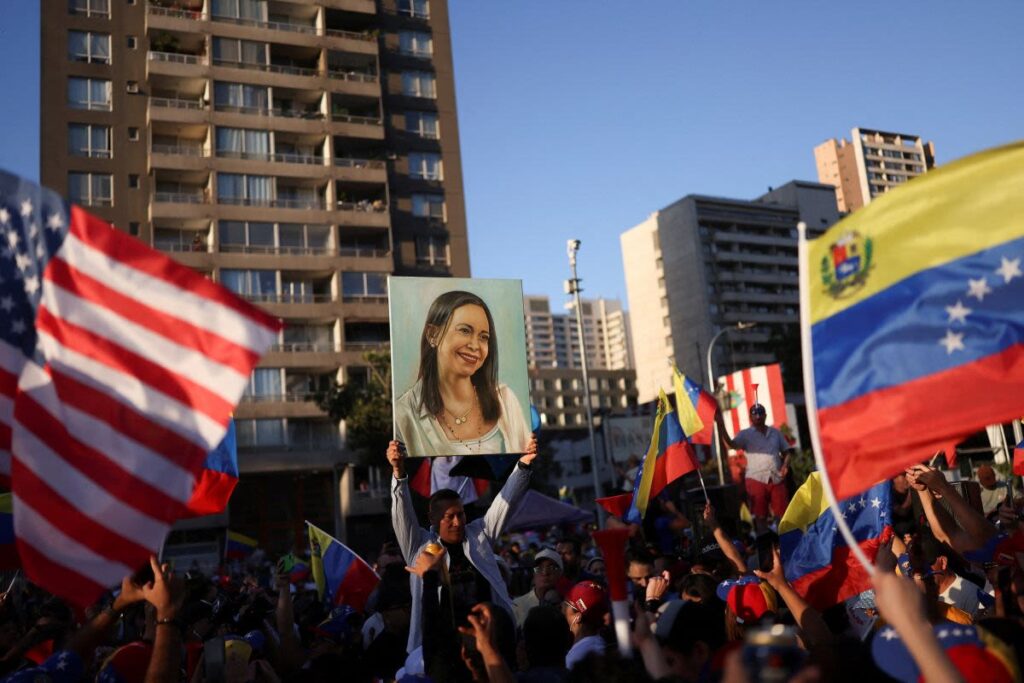
Based on its foreign policy principles and its commitment to peace, Mexico urgently calls for respect for international law and the principles and purposes of the UN Charter, and for an end to any acts of aggression against the Venezuelan government and people.
Latin America and the Caribbean is a zone of peace, built on the basis of mutual respect, the peaceful settlement of disputes, and the prohibition of the use and threat of force, so any military action seriously jeopardizes regional stability.
In the case of Uruguay, its diplomatic apparatus published a text on its official website (see official statement) which reads as follows:
Uruguay rejects, as it always has, military intervention by one country in the territory of another and reaffirms the importance of respecting international law and the Charter of the United Nations, in particular the basic principle that States must refrain from the threat or use of force against the territorial integrity or political independence of any State, or in any other manner inconsistent with the Purposes of the United Nations.
We reaffirm the character of Latin America and the Caribbean as a zone of peace and free of nuclear weapons, as has been the consensus position of our region.
Reaffirming the principle contained in Article 2 of the United Nations Charter when it is violated in such a flagrant and gross manner is an obligation for a State that believes in and defends this and other fundamental principles contained in the Charter since 1945.
Official reactions were much more reserved and even supportive of the US military action
These official reactions on January 3, 2026, and possibly others that may be announced in Latin America, can be compared to the official statement from Spain, which refrains from referring to the principle of prohibition of the use of force in its respective texts.
In the case of the official statement a>from Norway, it is made clear that the United States’ military action violates existing rules of public international law, something that the Representative of the European Union (EU) foreign policy representative to point this out in her tweet (see link). As for the United Kingdom (see statement) and Canada (see press release), the evasiveness is striking and more than noticeable. Similarly, we can cite this official statement adopted within the framework of CARICOM (see joint statement from its “Bureau”).
Returning to Latin America, Costa Rica’s brief three-sentence official statement (see link) is completely silent (Note 7) when compared to those of Brazil, Chile, Colombia, Mexico, or Uruguay. In this regard, a grammatical error in the first sentence with “has” instead of “have” shows that the text was drafted in a hurry, despite being released quite late in the afternoon in Costa Rica (4:19 p.m.). This same omission by Costa Rica in the face of flagrant violations of the principles and basic rules of international law has been observed in another recent case: Israel’s repeated violations of international humanitarian law in Gaza (Note 8).
While the official statement from Bolivia and the official statement from Peru avoid mentioning the United States, as does that of Nicaragua (see text), as well as that of Panama (see text), the official statement from Argentina (see link) welcomes the action taken by the United States, practically reproducing the language and assessments of the United States in a rather conspicuous manner. The diplomatic apparatus of Paraguay has made a similar statement (see official statement). It is striking that for these latter states, the objective of the fight against drug trafficking seems to justify actions such as those observed on January 3, 2026, in Venezuela. It is suggested that they review and evaluate the extent to which the capture of General Noriega in 1990 by the United States in Panama significantly reduced the flow of drugs to the US market.
As for Panama, the target of the last military intervention of this kind carried out in December 1989 by the United States, in violation of its territorial integrity and sovereignty, it appears that its current authorities were content to refrain from condemning and repudiating this action and considered it appropriate to avoid any reference to what Panama experienced in December 1989.
It is worth noting that in April 2018, the lawsuit filed by Guyana against Venezuela before the International Court of Justice in The Hague revealed US appetite for Venezuela’s hydrocarbons, with US diplomacy at that time led by a person whose only international experience was as CEO of a US oil company: Exxon Mobile (Note 9). These same interests in controlling Venezuela’s hydrocarbons were hinted at during the press conference given on January 3, 2026, by the current occupant of the White House.
One might also think that an official announcement such as this one from late August 2025 about multimillion-dollar investments by Chinese companies in Venezuela to extract oil could be considered in some economic circles around the White House in the United States as a serious threat to their interests, forcing the White House to develop some kind of strategy to protect them: By mere coincidence (or perhaps not so much…), in early September 2025, a first ship was eliminated by the United States off the coast of Venezuela, under the pretext of trafficking drugs to the United States (see note dated September 2, 2025).
Military interventions and official condemnations that fail to name those responsible
text of the judgment, in particular paragraphs 188 and 190, in which the ICJ expressly qualifies the prohibition of the use of force as a general principle as well as a customary rule (Note 10).
Despite the fundamental importance of the rule violated in the case of military intervention by one State against another, in Latin America it has sometimes been repudiated without expressly referring to the United States: Thus, in 2016, a resolution of the OAS General Assembly to “make amends” to the Dominican Republic for the United States’ intervention in 1965 referred to the “events of April 1965.” (see note published in OPALC with the final text of the resolution adopted).
It will be very interesting to see whether the various bodies of the OAS will comment on what happened on January 3, 2026, in Venezuela, or whether they will opt for a terrifying silence in the face of a violation of the 1948 OAS Charter by the United States. In this regard, the first press release from the OAS Secretary General (see text) suggests that semantic games and euphemisms, as well as omitting any reference to the United States, … will be very useful when drafting a resolution within the Permanent Council. A suggested comparison text with what the OAS may adopt (if it succeeds) in a future session of its Permanent Council could be this joint communiqué from Spain, Brazil, Chile, Colombia, Mexico, and Uruguay, with five paragraphs, the first of which states that:
1. We express our deep concern and rejection of the military actions carried out unilaterally in Venezuelan territory, which contravene fundamental principles of international law, in particular the prohibition of the use and threat of force, and respect for the sovereignty and territorial integrity of States, as enshrined in the Charter of the United Nations. These actions set an extremely dangerous precedent for peace and regional security and put the civilian population at risk.
The OAS can also review the EU’s January 4 statement (see text), which includes all EU member states except Hungary (see text with details on the list of the 26 signatory states). As is well known, the current US president has excellent relations with his Hungarian counterpart, whom he calls frequently and considers an exemplary political leader.
At the time of writing (January 8), no condemnation of this flagrant violation of its own charter had been issued by any OAS body: the Permanent Council meeting on January 5 merely listened to the positions of each State, without further action. As for the Inter-American Commission on Human Rights, its website remains silent on what happened on January 3 (see link). It is worth noting that with regard to the U.S. military operations to eliminate suspicious vessels and their crews, which began in early September 2025, it was not until December 2, 2025, that the Inter-American Commission on Human Rights expressed its concern in a press release (see Allegedly”? Yes, that’s right: “allegedly.” Nevertheless, in this belated and rather weak official statement to the United States, the Commission reiterates what it has said countless times to OAS member states:
When military or security forces use lethal force outside national territory, states have an obligation to demonstrate that such action was strictly legal, necessary, and proportionate, and to investigate ex officio any loss of life in that context. These obligations remain in force regardless of where the operations are carried out or the status attributed to the persons affected by them. Similarly, persons under the control of the State must always be afforded full respect for due process and humane treatment.
In conclusion
Whether collective or individual, the official reactions recorded since January 3, 2026, are characterized by a wide variety of tones and vocabulary: as we have always taught our students, diplomacy resides above all in the art of language.
However, in the face of a serious violation of a basic rule of public international law such as the absolute prohibition of the use of force, the cacophony observed in Latin America is quite striking, with some of these official reactions showing that for some (few) Latin American states, the United States’ action on January 3, 2026, does not set a dangerous precedent … and is legally valid (or, at least, does not warrant condemnation or repudiation in an official statement).
This article published in the United Kingdom by a renowned jurist indicates from its very title that there is no legal basis to justify such action in Venezuela by the United States. Similarly, this other article published in EJIL -Talk on January 5, 2026, and this other article in OpinioJuris on January 6. In this other article by a Mexican jurist, also published on January 6, the conclusions state that:
These principles were not negotiated and adopted simply on a whim by the States, but as a way to maintain international peace and security after two world wars that caused millions of deaths and destroyed material infrastructure created by the labor of millions of people. The world order is a response to that pathology. It is a rational and minimal measure to enable the peaceful coexistence of the international community.
When the DI disappears as a norm for dispute resolution and peaceful coexistence, it gives way to the politics of force, bringing us closer to world war.
For those who argue, echoing the narrative of the United States and others, that the defense of human rights and the eradication of illegitimate authorities justify such actions, it is worth remembering that the end does not always justify the means: authorities that are considered illegitimate by other states can be found in many parts of the world, whenever an electoral process is carried out in conditions that lack transparency and in which the political opposition cannot participate on a completely equal footing. However, to think that the solution lies in military intervention from outside is more than illusory, and there are many recent and less recent examples, both in Latin America and elsewhere, of foreign military interventions that have only served to aggravate the internal political situation they sought to “resolve.” As for the argument of the fight against drug trafficking (which seems to have convinced several political circles in Latin America, particularly in Argentina and Paraguay), it is worth remembering that:
- Just one month ago, the current occupant of the White House pardoned the former president of Honduras who had been sentenced in the United States to 40 years in prison for drug trafficking (see BBC report of December 3, 2025) and that;
- Many experts have questioned the notion of Venezuela being a major hub for drug trafficking to the United States.
With regard to human rights violations, several of which qualify as crimes against humanity in Venezuela, it is worth noting that two investigations have been pending before the International Criminal Court in The Hague since 2018 (see details at this link and this other link); in addition to numerous reports and repeated calls from various United Nations bodies on the prevailing human rights situation in Venezuela. Report A/HRC/51/43 of 2022, produced by a commission of inquiry of the United Nations Human Rights Council, available at this link.
Beyond the misjudgments of some, of circles that gravitate around US embassies (and repeat their narrative without reservation), and of a US president who has been as unpredictable as he has been erratic since taking office in January 2025 (with growing discontent within the United States just a few weeks before completing his first year in office), it is extremely interesting to compare the reaction of these same Latin American states to Russia’s military aggression against Ukraine on February 24, 2022 (Note 11): clearly, the consistency of some in defending the principles of respect for the territorial integrity of a state and the absolute prohibition of the use of force is not such, but has been transformed for several of them into total inconsistency between February 24, 2022, and January 3, 2026.
From a legal standpoint, both the events of February 24, 2022, and January 3, 2026, constitute flagrant violations of a fundamental rule enshrined in the United Nations Charter since 1945. The fact that in both unilateral military actions, in 2022 and 2026, the perpetrators are Permanent Member States of the Security Council should challenge all other Member States of the United Nations and lead them to condemn both actions with the same vehemence: in fact, progressively replacing the right to force with the force of law in relations between States has been a long and hard battle, which began with the enshrinement in 1945 of the prohibition of the use of force between States in the United Nations Charter. This battle is not over, and it is in the interest of all States on the planet that it not be abandoned.
Notes:
Note 1: See our note BOEGLIN N., “The assassination of Ghassem Soleimani by the United States in Iraq: brief notes from a legal perspective,” January 4, 2020. Full text available here.
Note 2: See our note BOEGLIN N., “Russia’s aggression against Ukraine: overwhelming vote in the United Nations General Assembly,” March 2, 2022. Full text available here.
Note 3: It should be remembered that Israel was the first state to officially refer to the notion of “preventive self-defense” in 1981, when the Israeli air force decided to bomb the Osirak nuclear reactor in Iraq, which had been built under a cooperation agreement between France and Iraq. See in this regard FISCHER G., “Le bombardement par Israël d’un réacteur nucléaire irakien,” Vol. 27 AFDI (1981), pp. 147-167, available at this link.
Note 4: Regarding the latest release of documents from the United States recorded in 2023, see BOEGLIN N. “The recent ‘declassification’ of secret documents by the United States 50 years after the 1973 military coup in Chile: some reflections,” September 11, 2024. Full text available here.
Note 5: See our note BOEGLIN N. “The rejection by MERCOSUR and other Latin American states of the use of force in Venezuela” August 12, 2017. Full text available at this link.
Note 6: The full text of Chile’s official statement reads as follows:
“As the government of Chile, we express our utmost concern and strong condemnation of the military actions that the United States has been carrying out in Venezuela. In particular, we condemn the announcement that a foreign state intends to exercise direct control over Venezuelan territory, administer the country, and, as its president has stated, continue military operations until a political transition is imposed. This sets an extremely dangerous precedent for regional and global stability.”
Chile reaffirms that respect for the sovereignty and territorial integrity of states is a red line that must not be crossed under any circumstances, and that it is also an essential pillar of international law. Sovereignty is not a formality; it is the essential guarantee that protects countries from external arbitrary actions and the law of the strongest. Today it is Venezuela, tomorrow it could be any other country. Likewise, the threat of unilateral external control of natural or strategic resources constitutes a serious violation of the principle of territorial integrity and jeopardizes the security, sovereignty, and stability of all states in the region. If they can do it there, why couldn’t they do it elsewhere in the future?
This development is taking place in an alarming geopolitical context, in which force is increasingly replacing rules as a mechanism for resolving international conflicts. Normalizing this logic erodes the multilateral system, weakens democracy on a global scale, and exposes all countries, especially those with less relative power, to unilateral decisions imposed by military force.
Democracy cannot be built through force or imposition. Chile urgently calls on the United Nations to take an active and immediate role, using all available mechanisms to prevent military escalation, protect the civilian population, and reestablish a framework for a political and peaceful solution in accordance with the United Nations Charter. To this end, we are coordinating with various governments. Given this scenario and its possible regional effects, as a government we have arranged for permanent monitoring of our borders in case of a possible increase in the flow of migrants from Venezuela to Chile, activating the various state institutions, and we will strengthen all monitoring and consular protection protocols, paying special attention to the situation of Chilean citizens in Venezuela.
Chile will act as it always has, responsibly, consistently, and firmly, defending principles that we consider non-negotiable: non-violence, the sovereignty of states, the prohibition of the use of force or threats, the peaceful resolution of disputes, and the full enforcement of international law.
Note 7: The full text of the official statement released by the Costa Rican diplomatic apparatus reads as follows:
“Foreign policy”
January 3, 2026, 4:19 PM
Statement from the Ministry of Foreign Affairs and Worship of the Government of Costa Rica on the situation in Venezuela.
San José, January 3, 2026. The Government of the Republic of Costa Rica is closely monitoring the actions taken by the United States in Venezuelan territory on January 3, 2026, which have resulted in the arrest of Nicolás Maduro and his wife Cilia Flores and their transfer to the United States, where they will be prosecuted.
The Costa Rican government calls for a democratic and peaceful transition in Venezuela that restores institutionality, the rule of law, and the will of the people expressed in the elections of July 28, 2024.
Costa Rica reaffirms its willingness to contribute to a peaceful, sustainable solution based on international law and the principles enshrined in the Charter of the United Nations and the Democratic Charter of the OAS, which promote regional stability, respect for human rights, and full regional commitment to the fight against drug trafficking and transnational organized crime.
Institutional Communication 001-2026 Statement on the situation in Venezuela Saturday, January 3, 2026
Note 8: See BOEGLIN N., “The Free Trade Agreement (FTA) with Israel signed by Costa Rica on December 8, 2025: reflections and questions, some of them uncomfortable,” December 22, 2025. Full text available at this link.
Note 9: See BOEGLIN N. , “Guyana’s claim against Venezuela before the International Court of Justice (ICJ): brief background,” April 6, 2018. Full text available at this link.
Note 10: It should be noted that in this case, the ICJ ruled against the United States’ actions; however, on September 12, 1991, Nicaragua chose to withdraw the claim filed for the second stage of the proceedings (compensation) to obtain compensation for the damage caused, thus bringing this long process to an end (see press release from the ICJ dated September 27, 1991). An initial estimate of the damages caused by the United States to Nicaragua can be found in this document submitted by Nicaragua to the ICJ in 1988. Paragraph 372 reads: “Therefore, the Court is requested to award Nicaragua a lump sum of US$2,000 million as appropriate compensation for the enormous social losses it has suffered due to the wrongful acts of the United States.”
Note 11: See our note BOEGLIN N., “Russia’s aggression against Ukraine: official reactions in Latin America,” February 24, 2022. Full text available at this link.

Navigate articles