

Leatherback turtles arrive early on Costa Rica’s Caribbean coast: the 2026 season begins
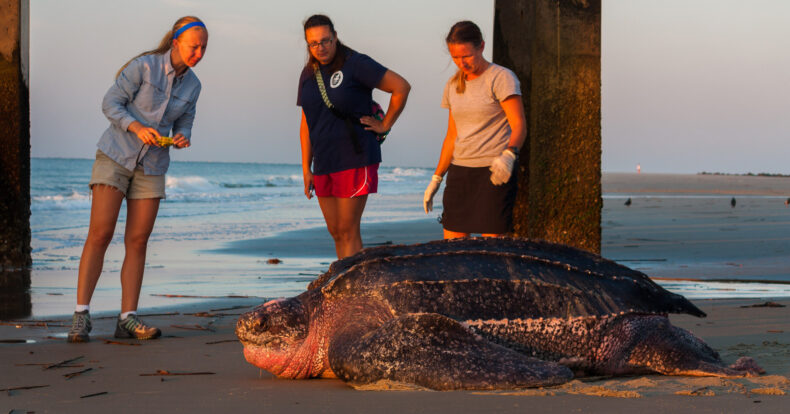
The leatherback turtle nesting season in the Caribbean region of Costa Rica is already underway, and it has brought a surprise: the first arrivals of the 2026 nesting cycle have come about 10 days earlier than usual. Park rangers in Tortuguero and Cahuita have confirmed this early activity, opening an unexpected window to witness one of the country’s most impressive natural spectacles.
This development has excited not only conservationists but also travelers, as it allows them to enjoy the experience before peak season. As a result, new slots for small-group guided night tours have already been made available, offering a unique opportunity to observe these marine giants without the crowds.
A different season: less people, more nature
Unlike the better-known green sea turtles that dominate headlines later in the year, leatherback turtles arrive first. According to SINAC, their season in Tortuguero runs from March to June, while in Cahuita the peak typically occurs between March and April.
Organizations such as the Sea Turtle Conservancy highlight Tortuguero as one of the key nesting sites for this species, underscoring the importance of this natural phenomenon.
For those seeking a more intimate experience with nature, the months of March through May, especially April, are the best time to visit. It’s a quieter time of year, ideal for those who want to avoid crowds and experience wildlife in a more authentic way.
Night tours: a safe and responsible experience
Turtle watching is available exclusively through guided night tours, designed to minimize the impact on the animals. These tours are scheduled at specific times, generally between 8:00 and 9:00 p.m., and last between 1.5 and 2 hours.
Small groups, typically of up to 10 people, are organized, and they only go out when a tracker confirms that a turtle is actively present on the beach. This controlled system ensures both the protection of the species and a more respectful and rewarding experience for visitors.
Why is the leatherback turtle so special?
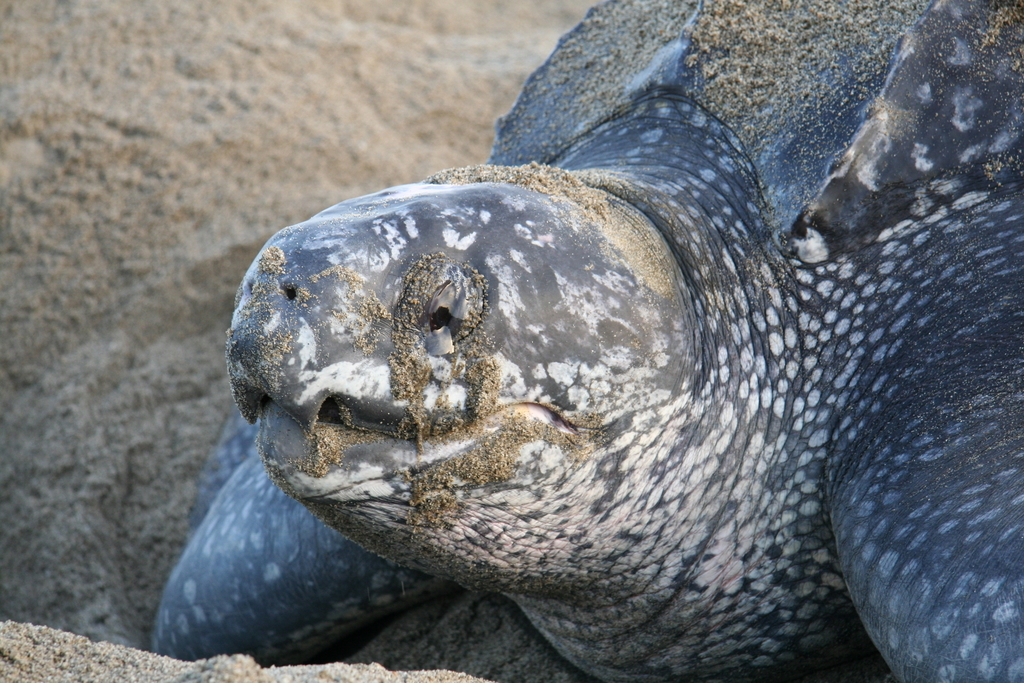
The leatherback turtle (Dermochelys coriacea) is the largest of all sea turtles. It can weigh up to 1,500 pounds and measure nearly 8 feet in length.
Unlike other species, it does not have a hard shell, but rather a flexible, leathery structure. It is also an extraordinary traveler: it can cross entire oceans and dive to remarkable depths, eventually returning to the very beach where it was born.
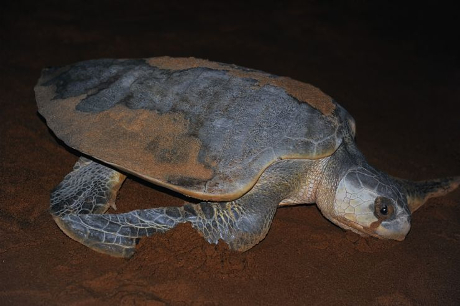
In the coast of Costa Rica, these turtles nest individually, unlike the massive “arribadas” of olive ridley sea turtles on the Pacific coast, making every sighting an intimate and almost magical moment.
Practical tips for your visit
- Book in advance: Night tours tend to sell out quickly. We recommend booking at least 24–48 hours in advance.
- Best time to visit: After sunset, between 8:00 and 9:00 p.m.
- What to bring: Closed-toe shoes (you’ll be walking on sand), insect repellent, and comfortable clothing.
- Where to stay: Tortuguero, ideal for direct access to the nesting beaches. Cahuita and Puerto Viejo, more laid-back options with opportunities for excursions.
- Estimated cost: Between $35 and $60 per person, including a guide and park admission.
- Preservation rules:
- Do not use flash.
- Do not touch the turtles or their eggs.
- Maintain complete silence.
- Restricted to red light only.
The perfect opportunity after Easter
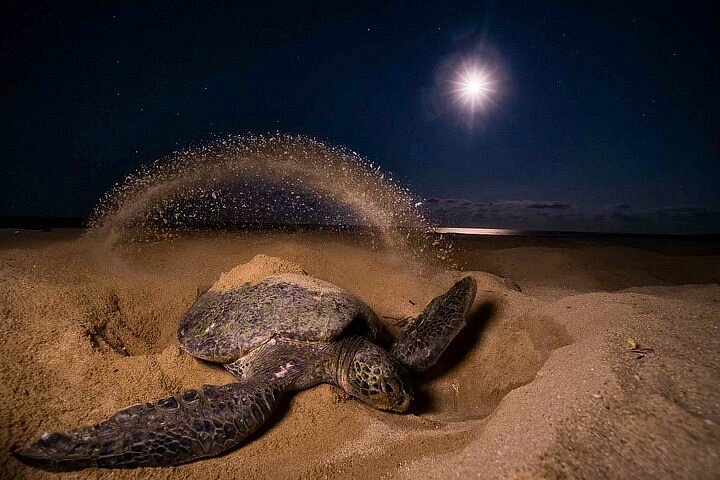
This early start makes the period after Easter an ideal time to visit Costa Rica’s Caribbean coast. The beaches are not yet crowded, as they will be between July and October, when green sea turtles arrive in large numbers.
For eco-conscious travelers, photographers, and families, this is the perfect opportunity to connect with nature in a responsible way, while supporting the work of local guides and conservation projects that protect these ancient species.
Costa Rica reminds us once again why it is one of the world’s most extraordinary destinations for ecotourism.
Sensorial Sunsets
Navigate articles