

The Panama Canal: why did France fail in the 19th century?
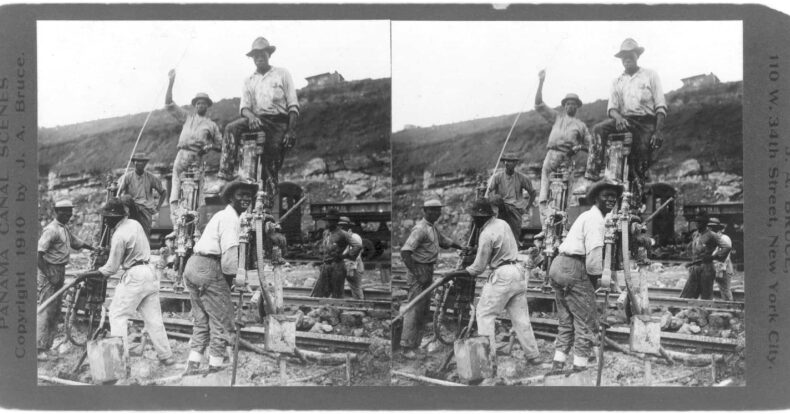
The French dream that never crossed the isthmus: Why did France fail to build the Panama Canal?
At the end of the 19th century, France undertook one of the most ambitious engineering projects in its history: the construction of an interoceanic canal across Panama. What for the French at the time represented a feat comparable to “going to the Moon or Mars” ultimately became one of the greatest technical, financial, and human failures of the century.
In 1880, under the leadership of diplomat and engineer Ferdinand de Lesseps, France officially began work on the canal. De Lesseps was already an internationally renowned figure following the success of the Suez Canal, inaugurated in 1869, which had transformed trade between Europe and Asia. With that precedent, the Panama project seemed a natural continuation of his legacy.
However, the reality on the isthmus would be radically different.
A monumental challenge in distant lands
French historian Samuel Poyard has noted that, for France, the Panama venture was as significant as space travel is today: a colossal project in a distant territory, fraught with technical, environmental, and logistical challenges.
The scale of the undertaking was extraordinary. Over a billion French francs were raised to finance the project, an astronomical sum compared to the roughly eight million francs spent on constructing the Eiffel Tower. The project captured the attention not only of France but also of London, the United States, and South America, all of whom recognized that the canal’s opening would transform global trade.
Today we know that around 5% of global maritime trade passes through the Panama Canal, confirming the strategic vision that motivated French ambition.
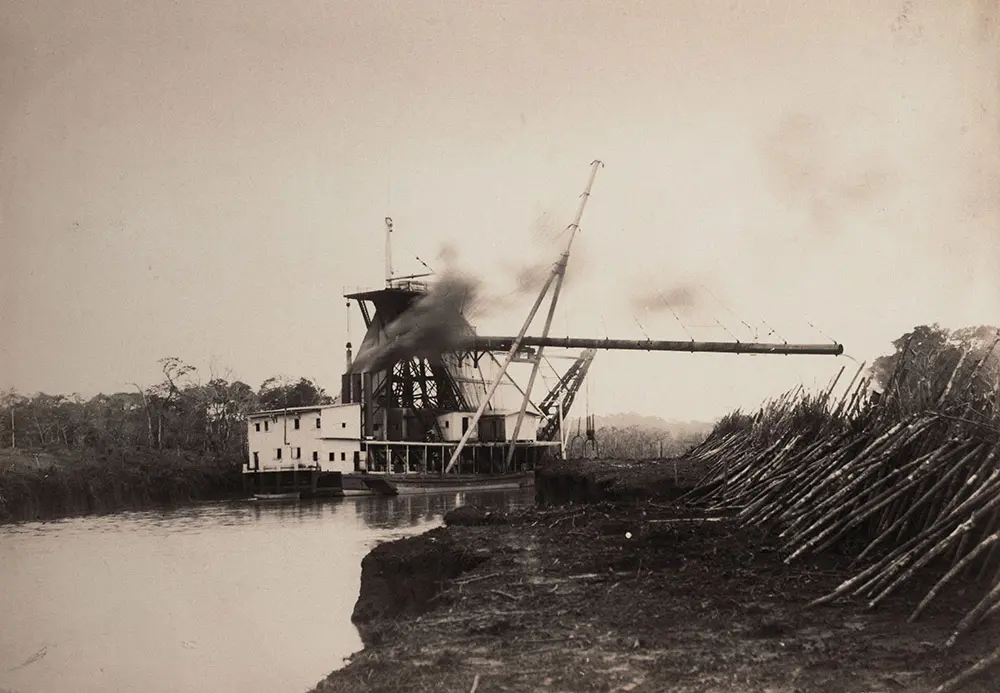
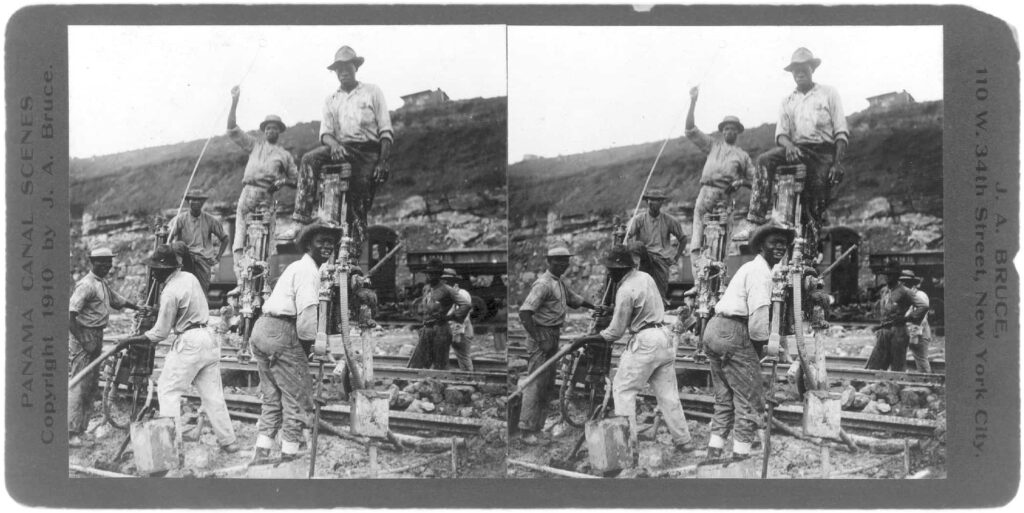
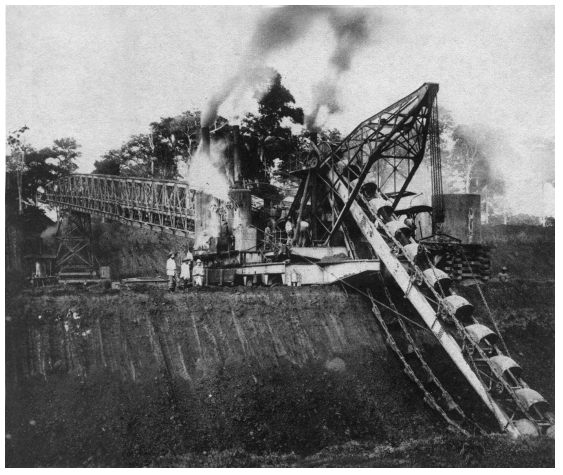
Tropical diseases: the invisible enemy
One of the most devastating factors was the impact of tropical diseases. It is estimated that around 22,000 workers died during the French period, mainly from malaria and yellow fever.
Most of the workers came from the Antilles, especially Jamaica, along with Chinese and French laborers. At a time when the role of mosquitoes in transmitting these diseases was not yet fully understood, sanitary conditions were dire, and mortality rates were alarmingly high.
Diseases not only decimated the workforce, but also undermined morale and confidence in the project.
A Critical Misjudgment: the Sea-Level Canal
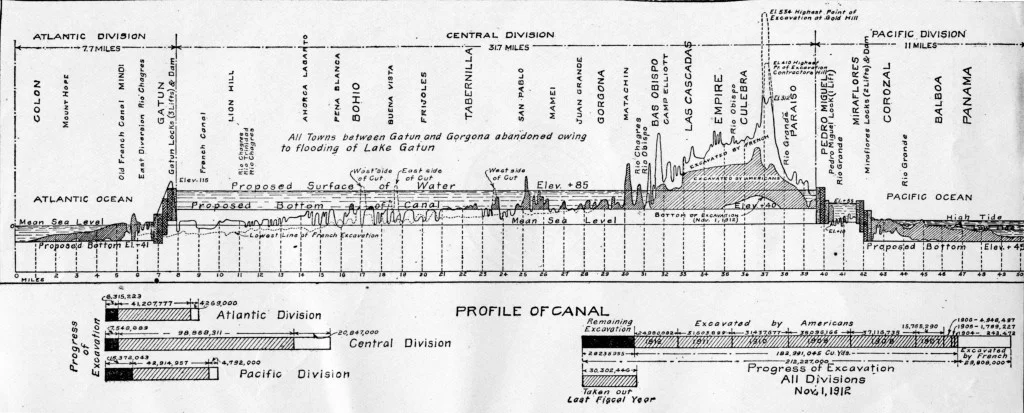
Beyond the human tragedy, there was a fundamental technical problem. De Lesseps attempted to replicate the Suez Canal model, proposing a sea-level canal without locks.
But Panama was not Egypt. The mountainous terrain of the isthmus, torrential rains, and unstable soil made this approach extremely complex and costly. The excavation required far exceeded initial estimates, resulting in delays and massive cost overruns.
Later, the United States would resume the project in 1904, opting for a system of locks that would allow for differences in elevation to be overcome. This technical decision proved key to the successful completion of the project in 1914.
Corruption and financial scandal
The health and technical challenges were further compounded by a financial scandal of enormous proportions. The company in charge of the canal was involved in mismanagement, waste, and corruption.
Ferdinand de Lesseps was sentenced to prison for embezzlement, as was Gustave Eiffel, who took part in the canal project while constructing his famous tower in Paris. However, the sentence was never enforced.
The so-called “Panama Scandal” shook French society, ruined thousands of investors, and dealt a severe blow to public confidence in institutions.
A failure that made history
The French attempt to build the Panama Canal was more than just an unfinished project. It was an epic undertaking marked by ambition, tragedy, and technical lessons. Although France failed to complete the canal, its efforts helped lay the groundwork for the United States to finish it decades later.
More than an isolated failure, the French venture in Panama symbolizes the limits of 19th-century engineering when confronted with tropical nature, as well as the risks of overconfidence and mismanagement.
For France, the adventure was an interoceanic dream that never crossed the isthmus, yet left an indelible mark on world history.
Sensorial Sunsets
Previous article International Arts Festival (FIA): A Ten-Day Celebration of Culture and the Arts in March 2026
Navigate articles