
Guanacaste Wildlife Monitoring: Documenting the Country’s Fauna
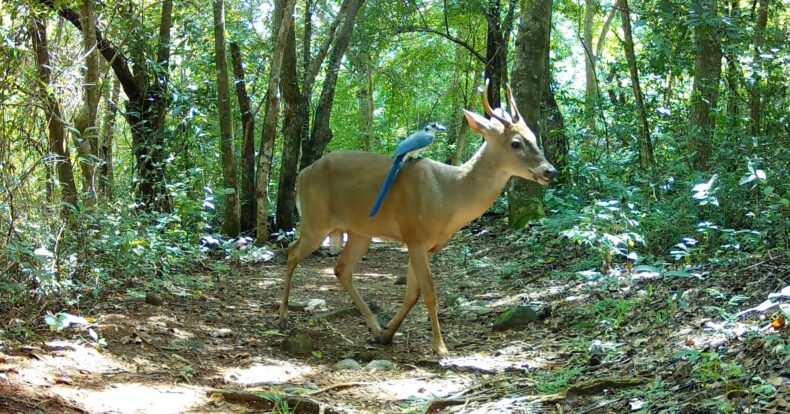

Costa Rica is renowned worldwide for its extraordinary biodiversity. Each year, thousands of visitors travel to the country, drawn by its lush landscapes and the opportunity to observe wildlife in its natural habitat. In the Guanacaste region, this rich biodiversity is reflected in a wide variety of species, including anteaters, ocelots, deer, armadillos, pumas, and white-faced monkeys, among many others.
However, despite the abundance of wildlife, spotting many of these animals in the wild can be a rare experience. This is where technology opens a new window into nature.
A new way to discover wildlife
Thanks to the use of camera traps equipped with state-of-the-art motion sensors, it is possible to capture high-definition footage of animals in their natural habitat. This innovative technology makes it possible to document the behavior, habits, and presence of species that would otherwise be virtually invisible to the human eye.
The footage is carefully sorted and edited, allowing for the production of high-quality audiovisual content. This material can be shared on websites, social media platforms such as YouTube, Facebook, and Instagram, or any other platform the client wishes to use.
Solutions for developers, real estate, and hotels
Wildlife monitoring has not only scientific value, but also commercial and tourism value. For developers, real estate agents, and hotels, this technology represents a unique opportunity to highlight the natural value of their properties.
Customized packages are available, including:
- Continuous monitoring of biodiversity on the property
- Creation of up-to-date audiovisual databases
- High-definition video production for promotional purposes
- Integrating content into websites and social media
- Video displays in common areas, such as reception areas
They can also design unique tourist experiences where guests take part in guided hikes to get a firsthand look at the scientific process of monitoring with camera traps.
Education for future generations
One of the cornerstones of this project is environmental education. We develop educational programs for schools, homeschool groups, and community organizations, with the aim of inspiring a passion for conservation in children and young people.
Through hands-on activities and field studies, participants learn about technology, biodiversity, and the importance of protecting ecosystems. These initiatives have already been implemented at institutions such as La Paz Community School and the Matapalo School.
Research and conservation
Wildlife monitoring also plays a crucial role in scientific research. Partnerships are fostered with private sanctuaries, researchers, national parks, and government agencies to develop comprehensive monitoring programs across the country.
Between the most notable collaborations are projects carried out with the Tempisque Conservation Area (ACT) and several of its protected areas.
Featured Projects
Over the years, wildlife monitoring has enabled the development of important initiatives in collaboration with organizations, communities, and tourism projects across Costa Rica.
Fondo de Biodiversidad Sostenible
The Fondo de Biodiversidad Sostenible (FBS), a program of the Banco Ambiental Foundation, works to conserve private lands by offering financial incentives to landowners who protect forests in various regions of the country. In one of the first projects carried out in Guanacaste, a wide variety of species were recorded, including jaguars, tapirs, and wild pigs.
Mi Laboratorio Científico: Matapalo y su Bosque
In 2019, the Matapalo School won one of the top prizes in the Fabricando Sueños contest, organized by Fundación Gente. Its proposal, focused on the use of camera traps as an educational tool, received funding of 5,000,000 CRC. The project included training sessions, field trips, and the creation of audiovisual materials for the analysis of local wildlife, with ongoing volunteer support.
Hacienda Pinilla
Located between Playa Avellanas and Tamarindo, this 4,500-acre property features tropical dry forests, rivers, and lagoons. Monitoring programs have made it possible to document a wide variety of species on the property.
Costa Elena
This development, spanning more than 4,000 acres on the northern Pacific coast of Guanacaste, borders the Guanacaste Conservation Area, a UNESCO World Heritage Site. Its natural surroundings are home to a wide variety of wildlife in tropical dry forest ecosystems.
Las Ventanas, Playa Grande
Las Ventanas is a 380-acre gated community located between Playa Grande and Playa Conchal. Its ocean-view properties border Las Baulas Marine National Park, making it an ideal setting for wildlife monitoring.
Las Catalinas
This coastal town under development is surrounded by more than 1,000 acres of tropical dry forest. The monitoring effort aims to document years of conservation work and the biodiversity found in the area.
Hotel Sugar Beach
Located in Potrero, Guanacaste, this hotel is set on a 25-acre property of tropical dry forest. The ongoing project aims to create an inventory of species as part of its commitment to sustainability.
La Paz Community School
This nonprofit bilingual school, located in Brasilito, is partnering to establish an extracurricular club focused on wildlife and technology, where students explore biodiversity using camera traps.
Monkey Park Foundation
Wildlife rescue and rehabilitation center in Portegolpe, where a monitoring project has been underway since 2014. To date, more than 70 different species have been documented on the property.
Refugio Nacional de Vida Silvestre Hacienda El Viejo
This 2,812-acre private preserve, located near Philadelphia, is part of an annual study focused on wildlife monitoring, contributing to the area’s 10-year management plan.
Wildlife video licensing
For documentary filmmakers, filmmakers, and content producers, there is an extensive library containing thousands of hours of high-resolution footage. From interactions among coatis to the unique behaviors of armadillos and white-faced monkeys, this material offers an invaluable resource for audiovisual productions.
Global reach and opportunities for collaboration
Although many projects are being carried out in Guanacaste, we are open to establishing partnerships in other regions of Costa Rica and even internationally. The invitation is open to any individual or organization interested in exploring the potential of wildlife monitoring.
For more information or to request a free, customized quote, please contact us by email: [email protected]
Sensorial Sunsets
Navigate articles