

Jabiru in Costa Rica: active nests highlight the importance of private farms for conservation
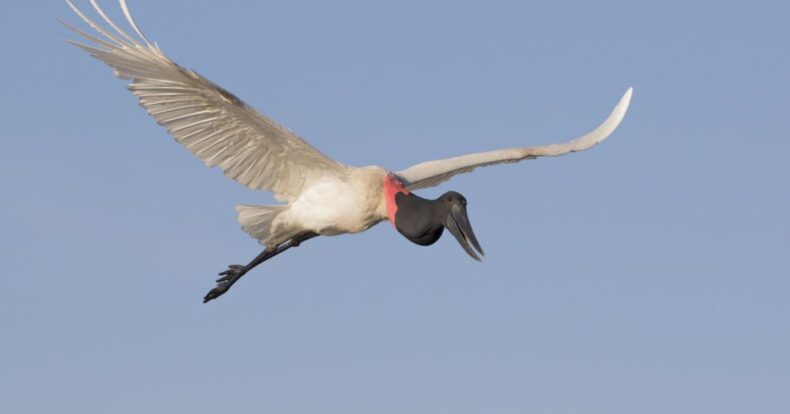

More than 75% of the sites where jabirus nest in Costa Rica are located on private properties, making landowners key partners in the conservation of one of the country’s most iconic and threatened birds. This was confirmed by the most recent monitoring by the Universidad Estatal a Distancia (UNED), which during the 2026 breeding season recorded nine active nests, 19 chicks and an estimated minimum population of 148 individuals.
The study is part of the Ecology and Conservation of the Jabiru in Costa Rica project, a research initiative that UNED has carried out for more than three decades and that has become the country’s longest-running scientific study of this species. In addition to evaluating the jabiru’s reproductive success, the monitoring provides insight into the conservation status of the wetlands where it lives and feeds.
Johnny Villarreal Arias, researcher and professor at UNED, explained that this year’s monitoring combined two complementary methodologies. During February, historical nesting sites were inspected, while in March and April simultaneous counts were conducted in the Tempisque and Frío river basins.
Thanks to this work, the research team identified nine active nests with 19 chicks and estimated a minimum population of 148 jabirus during the 2026 breeding period.
Nearly 100 jabirus arrived temporarily in Costa Rica
One of the most significant findings of the monitoring came in May, when researchers observed around 100 non-breeding jabirus temporarily gathering at Laguna Jicote in the Tempisque River basin.
The arrival of these individuals demonstrates that Costa Rica’s wetlands have ecological value that extends beyond our borders. They not only support the breeding population but also serve as a temporary feeding and resting site for jabirus from other regions
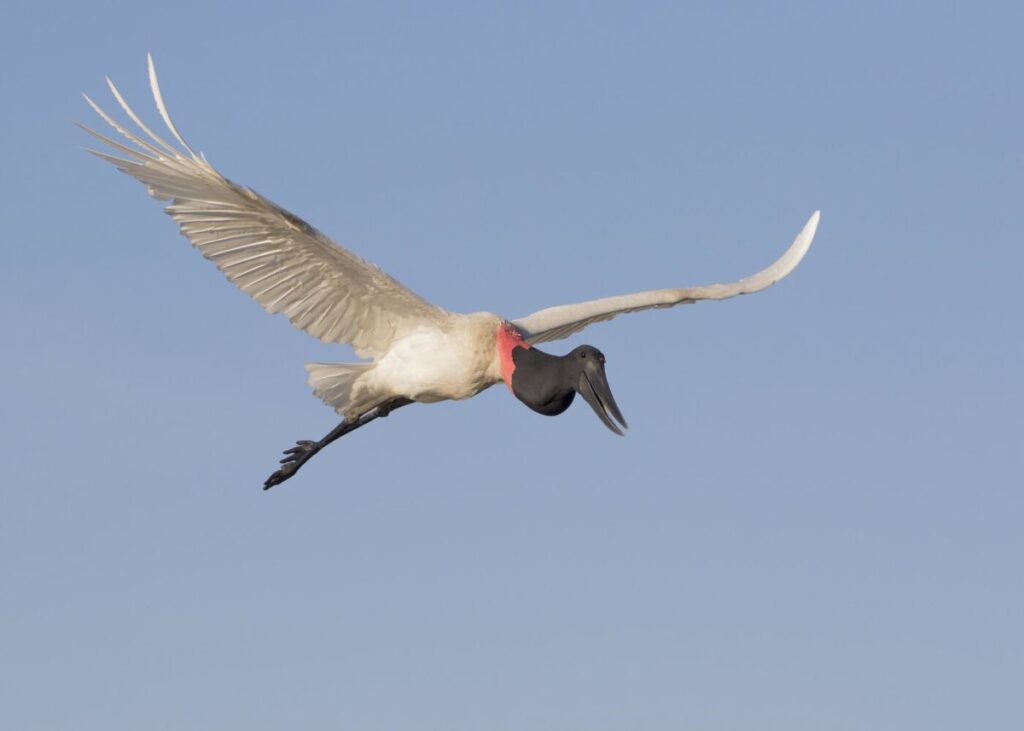
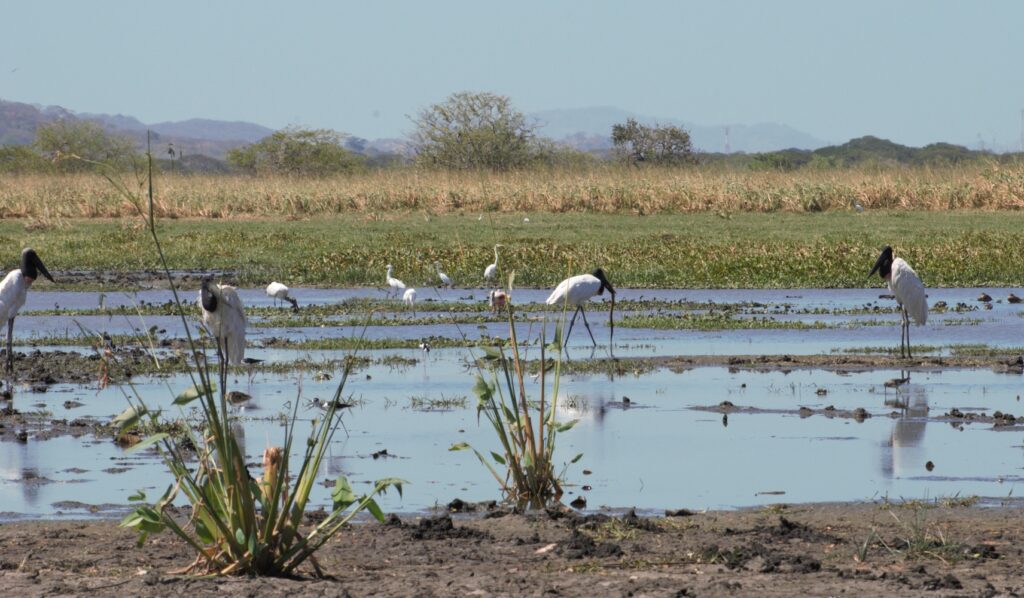
This behavior raised new questions for the scientific community. UNED indicated that it is still unknown whether these movements are part of regional migratory routes and where they subsequently head, because none of these birds have been tagged, making it impossible to track their movements.
For this reason, researchers consider it a priority to obtain funding to implement tracking techniques that would allow a better understanding of the species’ population dynamics in Central America.
Conservation depends on joint efforts
The monitoring also reaffirmed that the jabiru’s survival is closely linked to the protection of the private properties where it establishes most of its nests.
More than 75% of the nesting sites recorded during the 2026 breeding season were located within private farms, so the species’ continuity depends on the commitment of property owners, local communities and the institutions responsible for conservation.
UNED emphasized that this collaboration is essential to ensure the jabiru’s continued presence as a breeding species in Costa Rica.
Wetlands continue to face multiple threats
Researchers warned that the jabiru continues to face a number of threats to its survival. Among the main threats identified are the loss and degradation of wetlands, the felling of trees used for nesting, forest fires, irresponsible tourism near nests and the effects of climate change.
According to the university, protecting the jabiru also means conserving essential ecosystems for numerous species of flora and fauna that depend on these environments.
An indicator of wetland health
UNED noted that the jabiru is considered an indicator species of the conservation status of Costa Rican wetlands. When the species reproduces successfully and maintains stable populations, it indicates that these ecosystems continue to provide the conditions needed to sustain a rich diversity of wildlife.
In a context marked by increasing pressure on wetlands, the annual monitoring of the jabiru remains a key tool for guiding conservation strategies and assessing the environmental health of one of the most important ecosystems in northern Costa Rica.
Sensorial Sunsets
Navigate articles