
The Agami Heron and Its Refuge at Pacuare Reserve in Costa Rica
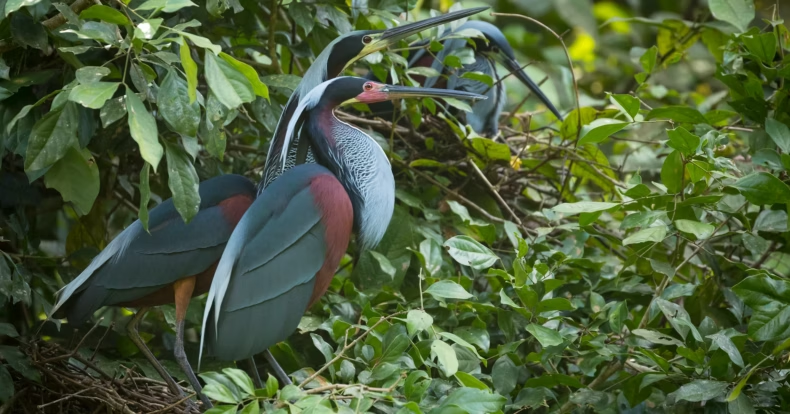
Pacuare Reserve, located on Costa Rica’s Caribbean coast, is an important site for the conservation of the Agami Heron (Agamia agami). The species uses a lagoon within the reserve as a nesting site, where it has been monitored since 2004 as part of a research project aimed at better understanding its reproduction and contributing to its conservation.
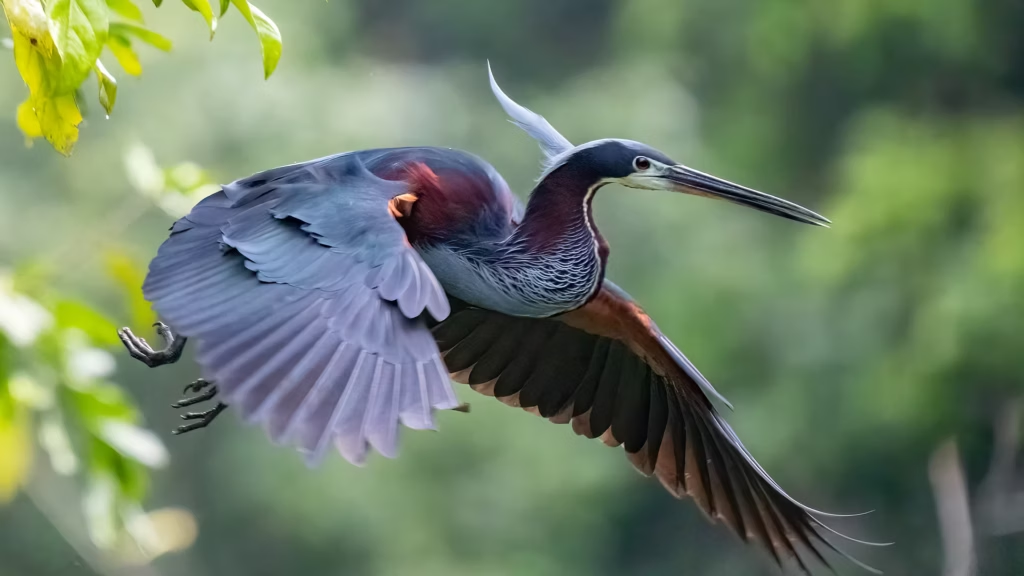
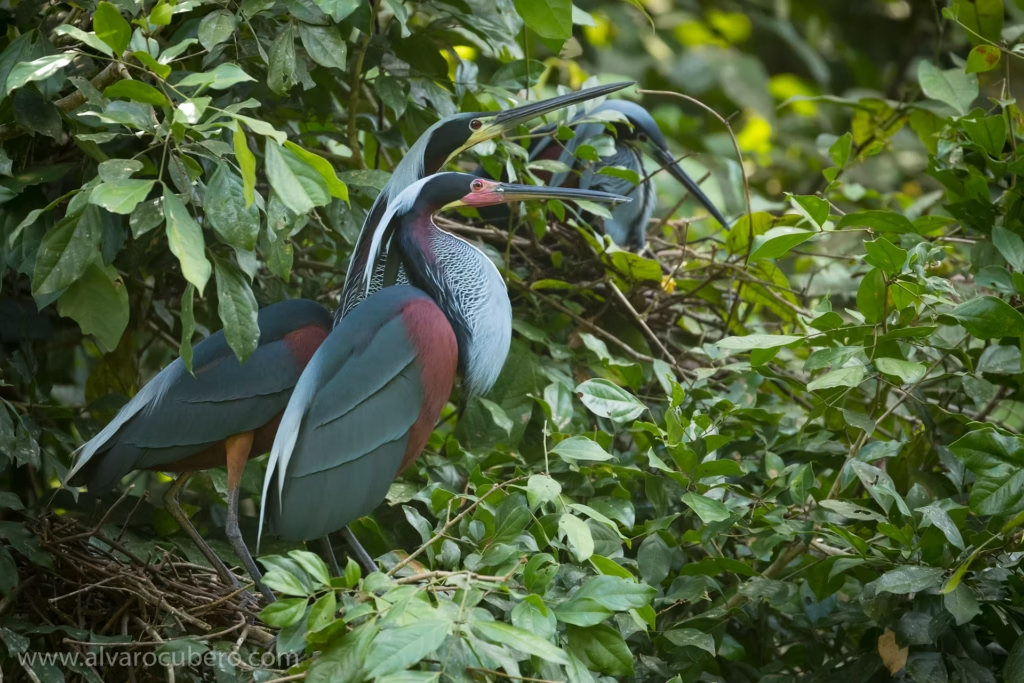
The Agami Heron is a little-known species that is difficult to observe outside its breeding sites. During the breeding season, it displays intensely colored plumage, while throughout the rest of the year it tends to be more elusive. The species is classified as Vulnerable on the International Union for Conservation of Nature (IUCN) Red List, partly due to the loss and degradation of its habitat.
A Colony at Pacuare Reserve
The presence of Agami Herons at Pacuare Reserve began to be documented in the early 2000s. Although local residents had already reported seeing brightly colored birds in the area, it was around 2003 and 2004 that they were confirmed to be Agami Herons using the site for breeding.
In 2004, the Reserve began a research project focused on monitoring this colony. The goal is to collect information about the birds’ reproduction and use it to guide management and conservation decisions. Monitoring includes recording nests, chicks, and bird behavior. Researchers make regular visits to the nesting site and use camouflaged structures to observe the colony and collect data without approaching the birds directly.
According to information from the Reserve, more than 4,450 Agami Heron chicks have been monitored since the project began. Long-term monitoring makes it possible to compare results between breeding seasons and gain a better understanding of the colony’s reproductive conditions.
Why Do Agami Herons Nest at Pacuare?
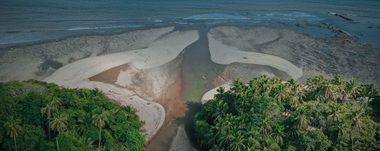
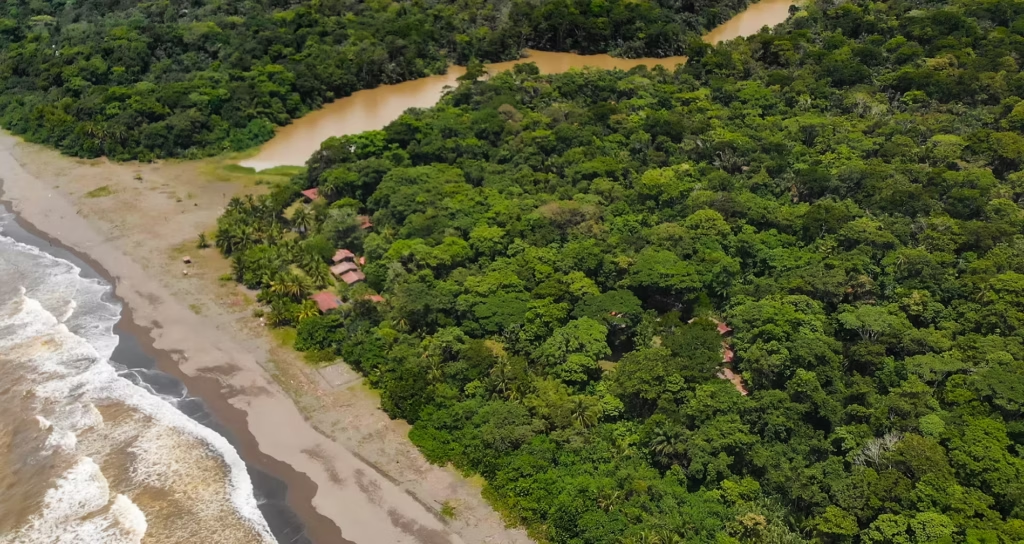
The presence of Agami Herons is closely related to the characteristics of the ecosystem protected by Pacuare Reserve. The area preserves tropical forests, wetlands, waterways, and a stretch of coastline that provide habitat for numerous species.
The Reserve protects approximately 688.6 hectares (1,701 acres) and six kilometers of coastline. The area is also used by sea turtles, jaguars, monkeys, frogs, and various bird species.
In this way, conserving these environments helps maintain the conditions different species need to feed, seek shelter, and reproduce. For the Agami Heron, the presence of aquatic environments and forested areas provides the resources and sites it needs during its breeding cycle.
A Reserve Created to Protect Sea Turtles
The history of Pacuare Reserve began before the Agami Heron became one of its main research subjects. In 1989, John Denham established The Endangered Wildlife Trust with the goal of acquiring and protecting land between Costa Rica’s Caribbean coast and the Tortuguero Canal. At the time, the lands that now make up the Reserve were divided among several properties, some of which were used for activities such as cattle ranching and coconut farming.
The area also faced problems related to the collection of sea turtle eggs and the hunting of green turtles. During the nesting season, large numbers of poachers arrived at the beach, affecting many nests.
With the creation of the Reserve, a process of protecting and restoring the area began. Sea turtle research and conservation programs were developed and, over the years, initiatives focused on studying other species found in the area were also expanded.
From Sea Turtle Conservation to Protecting Other Species
The work carried out at Pacuare Reserve demonstrates the connection between conserving a species and protecting its habitat.
The Reserve was initially established primarily to protect beaches used by sea turtles, but maintaining its terrestrial and aquatic ecosystems has also helped preserve habitats used by other species. Among them is the Agami Heron, whose nesting colony has become the focus of ongoing research. Protecting the area allows the birds to continue using the site while researchers collect information about their reproduction.
The Reserve also conducts projects involving other species and maintains education and research programs. Since 2000, Ecology Project International (EPI) has worked at the site with students and scientists, combining field research with conservation education.
Research and Observation of the Herons
Studying the colony requires specific protocols to minimize disturbance. Visits to the nesting site are conducted in small groups and accompanied by members of the research team.
Before entering the site, visitors receive information about the species’ biology and behavior. During observations, they must remain quiet and respect designated areas to avoid disrupting the birds’ activities.
There are also restrictions on the use of lights, chemicals, and other elements that could affect the colony. These measures make it possible to conduct research and educational activities without unnecessarily interfering with the herons’ natural behavior.
A Colony That Continues to Be Studied
Despite years of research, aspects of the Agami Heron’s biology and behavior still require further study. Information collected at Pacuare helps researchers understand changes in the colony from one breeding season to another and provides data that can be used to inform conservation decisions.
The project is also part of broader efforts to understand the species’ conservation status and share information with researchers and organizations dedicated to its study.
The conservation of the Agami Heron at Pacuare depends largely on maintaining the conditions of the ecosystem it uses. For this reason, decades of work to protect the area have benefited not only the sea turtles that initially motivated the creation of the Reserve, but also the many other species that now use this protected space. Among them, the Agami Heron has an important place in Pacuare Reserve’s research programs, where its nesting colony continues to be monitored to improve knowledge of the species and contribute to its conservation.
Sensorial Sunsets
Navigate articles