

Whale season in Costa Rica: where to see them in August
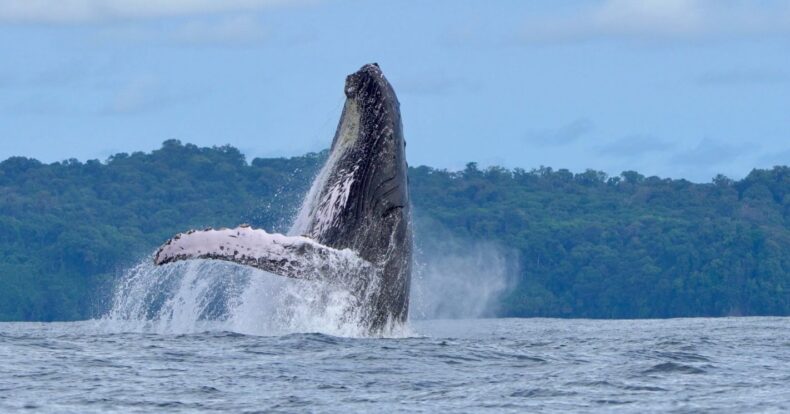

August marks the start of one of the most anticipated natural seasons along Costa Rica’s Pacific coast: the arrival of humpback whales from the Southern Hemisphere. During this month, humpback whales arrive in the country’s waters to mate, give birth, and raise their calves, making Costa Rica one of the best destinations in the world for whale watching.
One of Costa Rica’s unique characteristics is that it has the longest humpback whale-watching season in the world.. This is because it receives two different populations: whales that migrate from Alaska between December and March, and those that arrive from Antarctica between late July and October. Thanks to this phenomenon, it’s possible to see whales for more than six months of the year.
Although other species have also been recorded in Costa Rican waters, such as Bryde’s whales, along with occasional orca sightings, the undisputed stars are humpback whales. It’s also possible to see pilot whales, which actually belong to the dolphin family and are the second-largest species of oceanic dolphin in the world.
Why is August the best month to see whales?
August and September mark the peak of the Southern Hemisphere humpback whale season. During these weeks, sightings are frequent, daily in some parts of the Pacific, since the whales remain in warm waters to mate and raise their calves before setting off again on their long journey back to Antarctica.
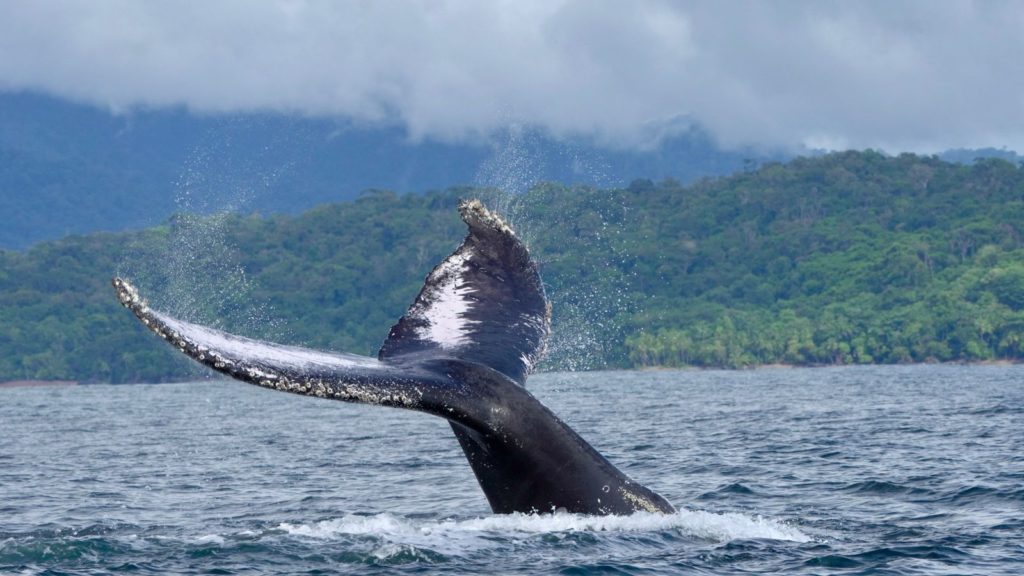
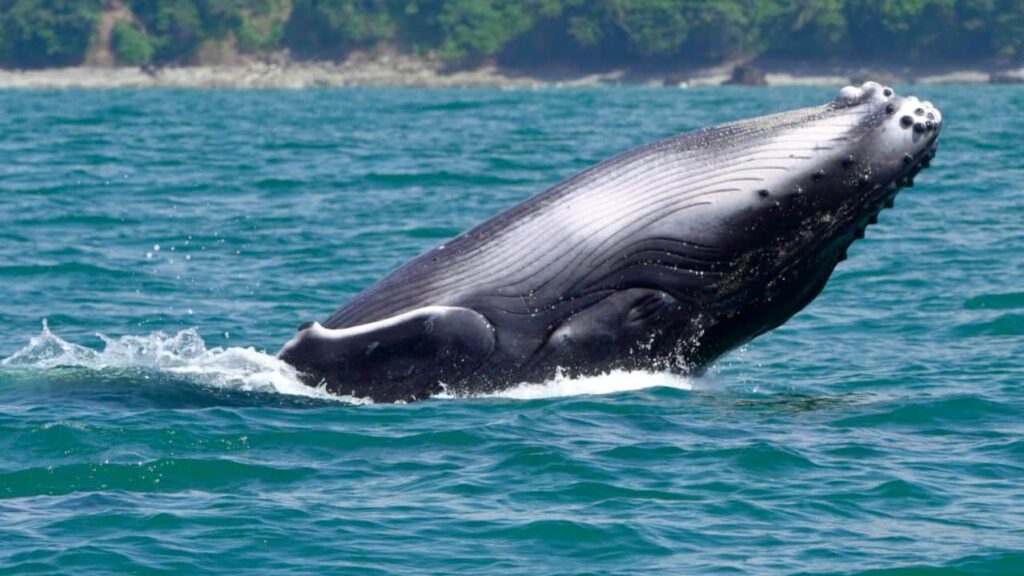
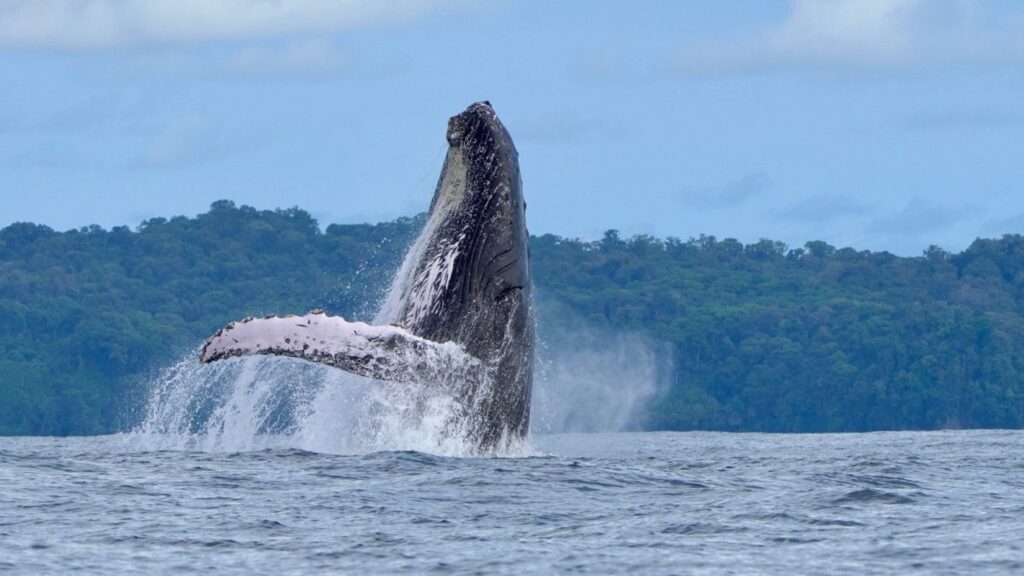
It’s precisely during this period that it’s most common to witness spectacular behaviors such as breaching, tail slaps, surfacing blows, and mothers swimming alongside their calves, which begin learning essential skills for survival.
What whales can you see in Costa Rica?
Humpback whales are the species most commonly seen along Costa Rica’s coasts. However, Bryde’s whales have also been recorded and, on rare occasions, orcas. In addition, you may encounter pilot whales, which despite their name belong to the dolphin family and stand out for their large size.
The best places to see whales in August
The best-known destination for whale watching is Marino Ballena National Park in Uvita, considered the country’s top spot to see these animals. Its location allows it to receive whales from both the Northern and Southern Hemispheres, offering one of the longest seasons and the highest chances of success in August and September. Tours often spot mothers with their calves, as the area serves as an important breeding and nursery ground.
The Osa Peninsula also offers excellent opportunities to see whales. Both Drake Bay and Golfo Dulce receive many individuals during the season, along with large groups of dolphins. As it’s less crowded than other tourist destinations, it offers a quieter experience that feels closer to nature.
Farther north, the Gulf of Papagayo in Guanacaste welcomes large numbers of humpback whales between July and September, with August being one of the most active months. While there aren’t tours dedicated exclusively to whale watching, it’s common to spot them on snorkeling trips, boat rides, or visits to different beaches around the gulf.
Boat tours departing from Flamingo, Conchal, and Tamarindo also frequently spot humpback whales in August. Catamaran cruises, snorkeling, and diving trips offer good chances to see both whales and dolphins once the boats move away from the coast.
Costa Rica has one of the longest whale seasons in the world
Another excellent place to spot whales in August is the Gulf of Nicoya. Many people taking trips to Tortuga Island manage to spot whales along the way, especially during the peak of the season.
In the Central Pacific, Manuel Antonio also offers opportunities to see humpback whales in August and September on catamaran tours. However, the odds tend to be lower than in Uvita, so those looking to maximize their chances often choose to travel to Marino Ballena National Park.
Where do the whales that arrive in Costa Rica come from?
Each year, two distinct populations of humpback whales arrive in the country. Those from the Southern Hemisphere migrate from Antarctica between late July and October, while those from the Northern Hemisphere travel from Alaska and other parts of the North Pacific between December and March. Both populations travel thousands of kilometers to reach Costa Rica’s warm waters, where they mate and give birth.
An encounter that depends on nature
Although August offers some of the best conditions to see humpback whales in Costa Rica, no sighting can be guaranteed. These animals are wild and follow their own migration and behavioral patterns, so each tour depends on natural factors. In addition, Costa Rican law protects these marine mammals. Swimming with whales or dolphins, touching them, or deliberately approaching them is not allowed, in order to avoid disrupting their behavior and to ensure their well-being.
Those who visit the Pacific coast in August will have the chance to witness one of the country’s most impressive natural spectacles: the arrival of humpback whales, a phenomenon that makes Costa Rica one of the world’s best destinations to admire humpback whales.
Sensorial Sunsets

Navigate articles