
Costa Rica’s Corals: The Impact of El Niño
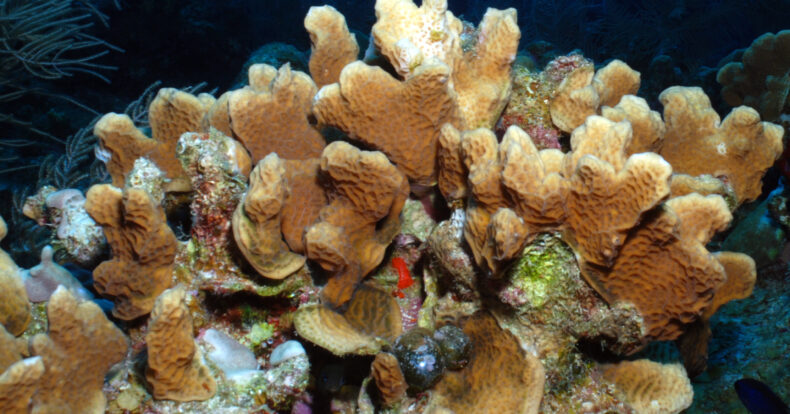

Rising ocean temperatures pose new challenges for marine conservation in Costa Rica. On Isla Tortuga, researchers from the State Distance University (Universidad Estatal a Distancia, UNED) modified the conditions in their coral nurseries to protect the organisms during the 2026–2027 El Niño episode. In Playa Blanca, another initiative aims to support biodiversity by installing underwater structures that provide habitats for different species.
Although both projects operate in Costa Rica’s Pacific region, their immediate goals differ. One seeks to reduce the thermal stress affecting cultivated corals, while the other focuses on restoring marine habitats. Their results may provide useful information to guide future conservation efforts.
Coral Bleaching and Its Consequences
Corals have a close relationship with microscopic algae called zooxanthellae, which live in their tissues and provide a significant portion of the energy they need. This association supports the growth and maintenance of coral reefs. When water temperatures remain above the levels corals can tolerate for an extended period, their relationship with these algae is disrupted. Corals may expel the algae and lose their characteristic coloration. This phenomenon is known as coral bleaching.
Bleaching does not mean that every affected coral will die. However, the loss of these algae reduces the corals’ energy supply and can hinder their growth and recovery. If thermal stress continues, the risk of mortality increases. The situation can also affect other marine species. Reefs provide food, shelter, and breeding grounds for fish, crustaceans, and numerous invertebrates. Their deterioration can disrupt ecological relationships and harm human activities that depend on marine resources, such as fishing and tourism.
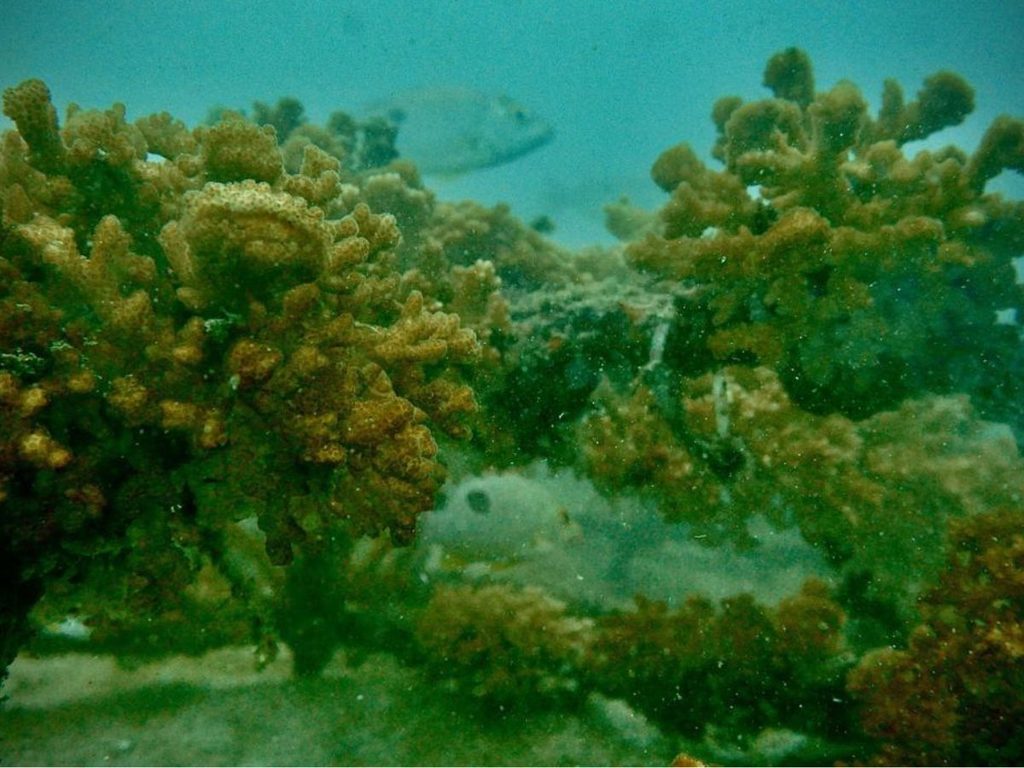
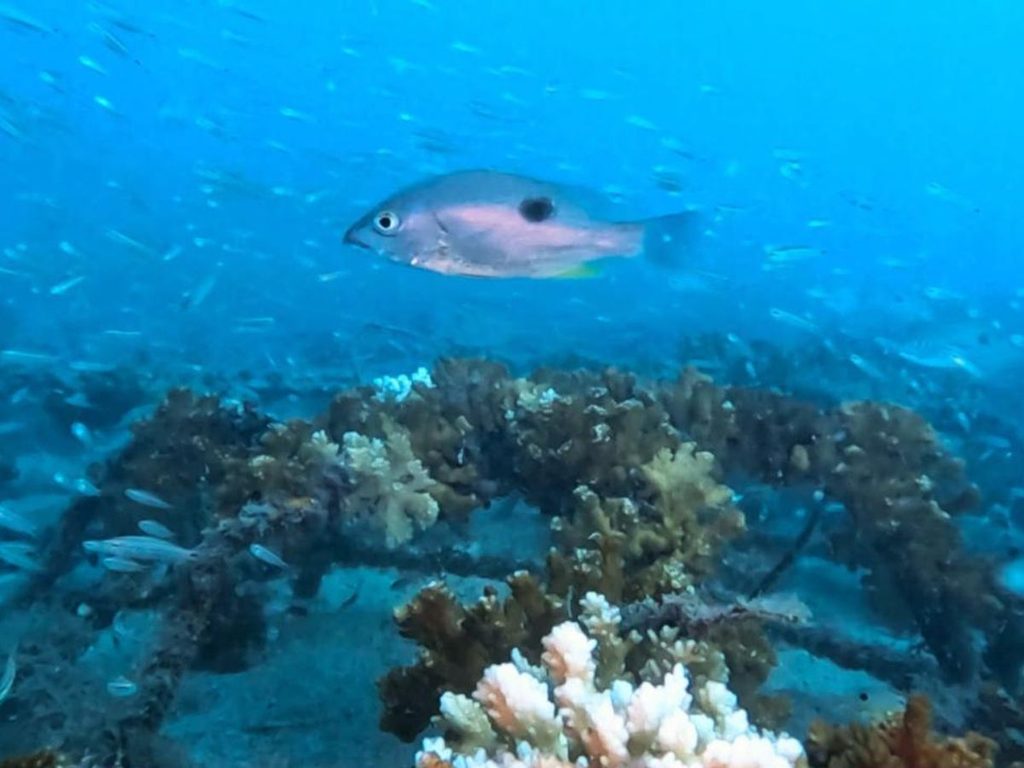
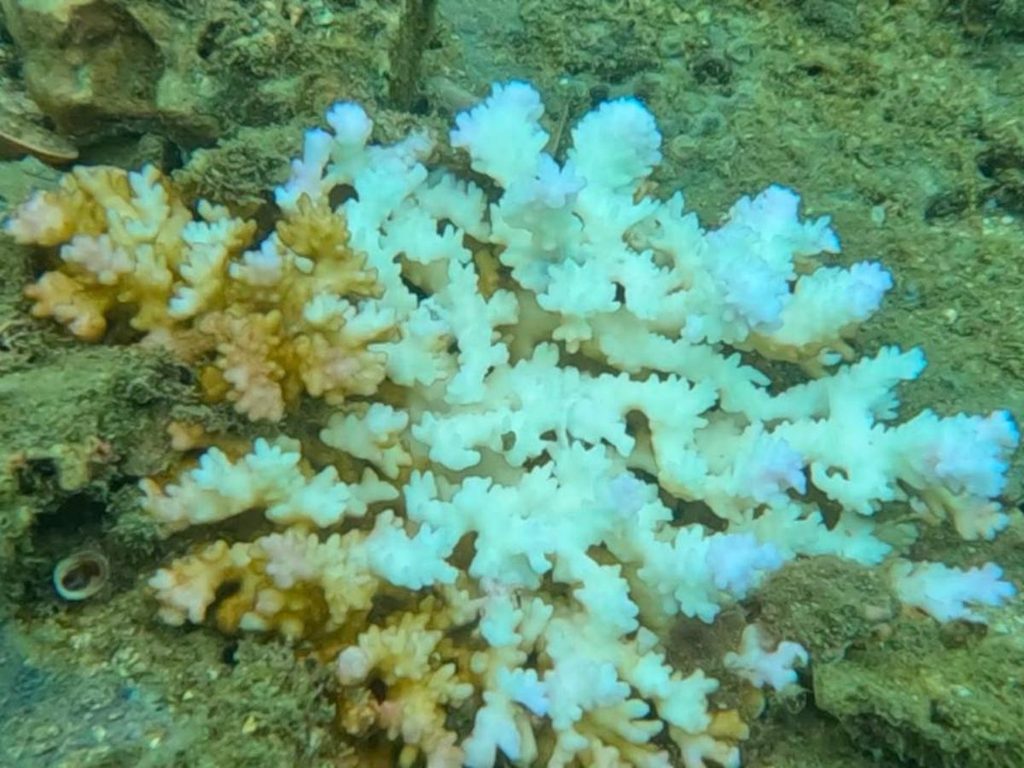
The El Niño episode poses a challenge for coral conservation projects along Costa Rica’s Pacific coast. Warmer water can disrupt the relationship between corals and zooxanthellae, microscopic algae that are essential to coral nutrition. In response to this risk, UNED moved the 2,700 corals in its Isla Tortuga project to a depth of 13 meters to reduce their exposure to high temperatures. The corals’ response will need to be assessed through ongoing monitoring by the scientific team.
Changes to the Isla Tortuga Project
On Isla Tortuga, in the Gulf of Nicoya, UNED introduced changes to its coral restoration project to reduce the organisms’ exposure to high temperatures. According to information released by the university on October 14, 2026, the team moved 2,700 corals from their cultivation structures to a greater depth.
The nurseries were moved from five to 13 meters underwater. With this measure, the researchers aim to find more favorable temperature conditions for the corals during the current ocean-warming episode. The initiative is supported by the National Learning Institute (Instituto Nacional de Aprendizaje, INA) and Bay Island Cruises.
The team also temporarily suspended some restoration activities, including coral fragmentation, coral gardening, and the installation of new structures. These decisions allow the team to focus its efforts on protecting the organisms already involved in the project. Scientific monitoring is another important part of the response. Researchers assess the corals’ condition and record water variables such as temperature and salinity. These data will help evaluate how the corals respond to the change in depth and determine when it will be appropriate to resume the suspended activities.
The relocation is an adaptive measure in response to current conditions, but its effectiveness must be verified through continuous observation. Monitoring the corals over the coming weeks and months will provide a better understanding of their recovery prospects.
Playa Blanca Turns to Underwater Structures
In Playa Blanca, on Costa Rica’s Central Pacific coast, Punta Leona Beach Club and the MareBlu Foundation are developing a marine restoration initiative that began in 2020. The project uses artificial structures to provide surfaces for marine organisms to colonize and spaces where different species can find shelter.
According to information released in 2026, the initiative has more than 75 structures in place. The goal is to gradually expand this network to 200 units and help connect two natural reefs separated by a sandy area. The structures can provide surfaces for marine organisms to settle and offer shelter to different species. The project also involves attaching live coral fragments to these surfaces to support their growth and contribute to habitat recovery.
Surveys Reveal Changes in Marine Life
Data released in 2026 indicate that more than 60 fish species and 5,708 invertebrate individuals have been recorded around the structures. These figures provide a reference for the diversity observed in the area and help researchers track changes in the marine community associated with the project.
However, these records must be interpreted carefully. The presence of numerous species is a relevant indicator, but it does not, by itself, demonstrate that the ecosystem has recovered all its functions. Assessing the effects of restoration also requires studying population trends, coral survival, and environmental changes over time.
The project also includes an underwater museum consisting of nine sculptures. This space combines educational and tourism activities with the marine restoration initiative. It may help visitors learn about the underwater environment, provided that activities remain compatible with habitat protection.
The project’s long-term progress also depends on addressing other environmental pressures. Pollution, fishing activities, high temperatures, and boat traffic can affect marine organisms and the installed structures. Restoration efforts must therefore be accompanied by measures to reduce these impacts on the ecosystem.
Recovery Requires Long-Term Monitoring
The experiences of Isla Tortuga and Playa Blanca show that marine restoration requires measures tailored to local conditions. While UNED seeks to reduce thermal stress on its corals, the Playa Blanca project focuses on creating habitats that encourage marine organisms to establish themselves.
Both initiatives require ongoing monitoring to determine whether their actions produce lasting benefits. The number of relocated corals, installed structures, and recorded species are useful indicators, but they are not enough on their own to demonstrate full ecosystem recovery.
As the ocean warms, protecting coral reefs requires a combination of scientific research, habitat protection, and measures to prevent other sources of degradation. Monitoring these projects can provide valuable information to guide future restoration efforts along Costa Rica’s coasts.
Sensorial Sunsets