

Pirates in the Costa Rican Caribbean: The Expedition of Mansvelt and Its Consequences
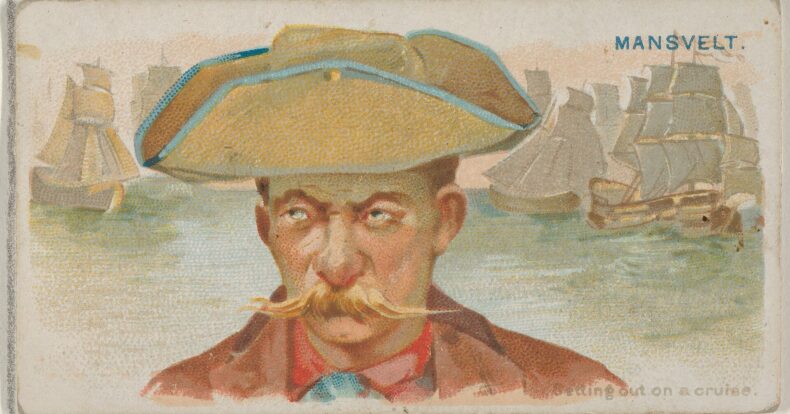

Pirates of the Caribbean: a scene of conflict
The 1666 incursion by the Dutch pirate Edward Mansvelt into Costa Rica is one of the most significant yet least well-known episodes in the country’s colonial history. Set against the backdrop of the rise of piracy in the Caribbean during the 17th century, this event highlights both the vulnerability of the Central American provinces and the strategic importance of Costa Rican territory within the routes of the Spanish Empire.
In April 1666, Mansvelt landed on the Caribbean coast near Moín with a sizeable force. His objective was to advance from Matina to Cartago, the provincial capital, and from there push toward the Pacific. This strategy was in line with the thinking of pirates of the time, who sought not only to plunder but also to control overland routes connecting the two oceans.
Mansvelt’s Inland Advance and the Colonial Response
The route taken by the pirates followed paths that today pass through key regions such as Matina and Turrialba. In the 17th century, these territories were covered by dense forests and inhabited by Indigenous communities, serving as natural corridors between the Caribbean and the Central Valley.
Mansvelt’s advance prompted a swift response from the colonial authorities. Governor Juan López de la Flor organized defenses at strategic points such as Quebrada Honda, where he set up ambushes and fortifications. This response forced the pirates to retreat before reaching Cartago, thwarting their main objective.
Pirates in the Caribbean: Consequences for Indigenous Communities
Although the incursion was brief, its effects were profound. Colonial authorities, fearing alliances between indigenous peoples and pirates, took drastic measures against communities such as the Tariacas and the Botos. These populations were displaced, punished, or relocated, and in many cases their territories and crops were destroyed.
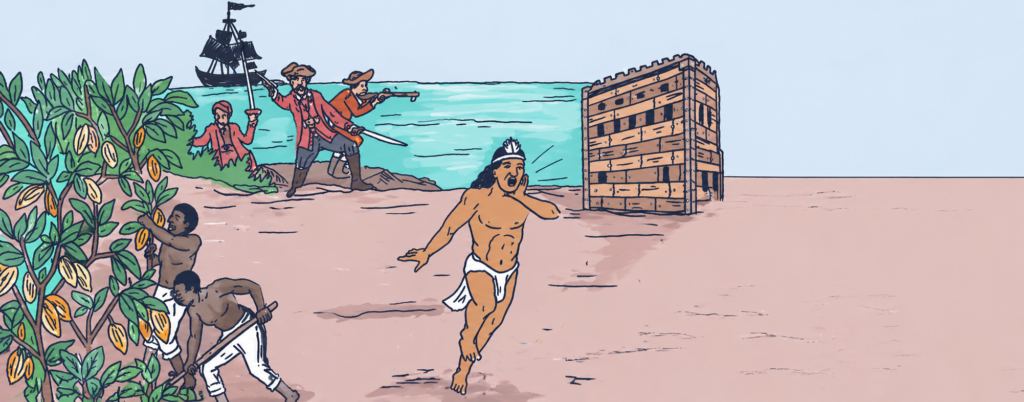
Esteban Yapirí, for his heroic defense of the national territory against the invasion by the English pirates Mansfield and Morgan
These events reveal the difficult position of Indigenous communities, caught between colonial rule and the threat of piracy. Far from being passive participants, they were forced to make difficult decisions amid constant violence and pressure.
A Historical Interpretation of the Region
This episode helps us understand that 17th-century Costa Rica formed part of a broader geopolitical landscape characterized by imperial conflicts, transatlantic trade, and cultural tensions. The roads, rivers, and mountains now traveled for tourism were once strategic routes and theaters of conflict.
From a contemporary perspective, this story adds a deeper dimension to the landscape. It is not merely about natural spaces, but about territories steeped in history, where cultural and social processes intertwine and continue to shape the country’s identity.
Sensorial Sunsets
Navigate articles