

Animal abuse: initiative seeks to strengthen animal protection in Costa Rica


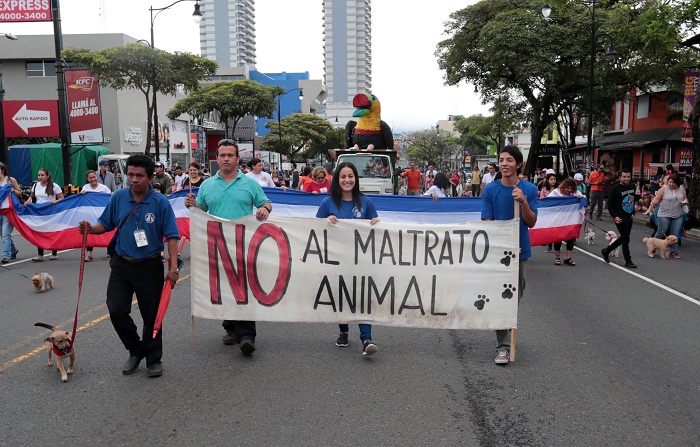
Frente Amplio has introduced a bill in Costa Rica’s Legislative Assembly to reform the Animal Welfare Law by increasing penalties for animal abuse, regulating commercial breeding facilities, and establishing clearer standards for animal shelters and foster homes.
The initiative, processed under file 25,645 and introduced by lawmaker María Eugenia Román, proposes a comprehensive update to legislation that, according to its backers, has not undergone substantive changes in more than 30 years, despite the evolution of the national and international legal framework on animal protection.
Recognition of animals as sentient beings
One of the bill’s main proposals is to explicitly recognize animals in the law as sentient beings, affirming their right to humane treatment, respect, and protection.
The proposal notes that this concept reflects criteria developed by the Constitutional Chamber and the Inter-American Court of Human Rights, strengthening the legal framework for defending animal welfare in Costa Rica.
When introducing the bill, lawmaker María Eugenia Román said, “Animals are not objects; they are sentient beings capable of feeling pain, fear, and distress, and the law that protects them has not been meaningfully updated in more than three decades.”
Three major changes proposed by the reform
The initiative proposes changes in three main areas:
- Regulation of commercial animal breeding.
- New requirements for shelters and foster homes.
- Toughening the penalty regime for animal abuse.
Greater oversight of breeding facilities
The bill would require all establishments engaged in commercial animal breeding to operate under permanent veterinary supervision and comply with regulations issued by the National Animal Health Service (Senasa), a requirement that is not currently stated explicitly in the law. The measure aims to strengthen oversight of breeding facilities and improve welfare conditions for breeding animals.

Regulation of shelters and foster homes
Another key element of the proposal is the introduction of specific provisions regulating the operation of animal shelters and foster homes. The bill would establish minimum operating and animal welfare standards for these organizations, addressing an area where the current legislation contains significant gaps.
How would fines for animal abuse change?
The bill creates a classification of offenses into three categories: minor, serious, and very serious, with fines calculated based on the base salary in force for 2026, set at ₡462,200.
Minor offenses
Conduct considered minor would carry fines of between one and three base salaries, equivalent to approximately:
- ₡462,200 to ₡1,386,600.
Serious offenses
Serious offenses would be punished with fines of between three and five base salaries, that is:
- ₡1,386,600 to ₡2,311,000.
This category includes offenses such as:
- Using violent methods for training.
- Administering substances that alter the animal’s behavior.
- Using animals as prizes or in raffles.
- Stealing animals.
- Keeping dogs or cats permanently on terraces, in basements, or in vehicles.
- Involving them in prohibited cultural or festive activities.
Very serious offenses
The most severe penalties would reach up to 50 base salaries, which represents approximately ₡23.1 million.
Offenses classified as very serious would include:
- Intentionally causing the death of a domestic animal.
- Performing euthanasia using inappropriate methods or by unqualified personnel.
- Training animals for fights.
- Failing to comply with rules on animal experimentation.
Why do they consider the current law insufficient?
Supporters of the bill argue that the current legislation no longer reflects today’s standards for animal welfare.
As evidence, they point to data from Senasa, which received 6,244 reports of irresponsible pet ownership in 2019. Reported cases included animals without water or food, illegal breeding facilities, animal hoarding, aggressive dogs, and sick animals without veterinary care.
Although the law was amended in 2017 to include prison sentences of up to three years for causing the death of a domestic animal, the proponents believe there are still significant gaps related to commercial breeding and the regulation of shelters.
The bill still must clear the legislative process
Bill No. 25,645 is at the beginning of the legislative process. Before it becomes law, it must be analyzed in committee and then pass two debates in the Legislative Plenary.
The proposal comes amid growing discussion about animal welfare in Costa Rica, where another bill promoted by Frente Amplio has also recently advanced to incorporate wildlife crossings into road infrastructure projects.
If approved, the legislation would represent one of the most significant reforms to Costa Rica’s animal protection framework since the 2017 amendment, expanding requirements for breeding facilities and shelters while introducing a much stricter system of penalties for animal abuse.
Sensorial Sunsets
Navigate articles