
Cabo Blanco: Nicolás Wessberg and Karen Mogensen, Pioneers of Conservation
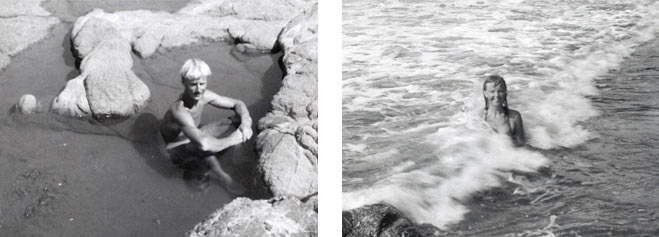

Long before Costa Rica became internationally recognized for its conservation policies, a European couple decided to make protecting nature their life’s work. Nicolás Wessberg, originally from Sweden, and Karen Mogensen, born in Denmark, arrived in the country in 1954 after traveling through different parts of the Americas in search of a place where they wanted to settle.
They eventually found that place in Montezuma, on the Nicoya Peninsula. There, they began a life devoted to nature and, over time, helped launch one of the projects that would shape the history of conservation in Costa Rica: the creation of Cabo Blanco Absolute Natural Reserve.
A Dream on the Nicoya Peninsula
During the 1950s, large areas of forest on the Nicoya Peninsula were being cleared for agricultural activities. The colonization policies of the time encouraged the use of lands considered available, accelerating the loss of forest cover.
Wessberg and Mogensen watched this process with concern. Cabo Blanco particularly caught Nicolás’s attention because of its diversity of plant and animal life. The Swedish naturalist visited the area to collect seeds and became convinced that this forest needed to be protected.
The couple then began seeking support to acquire the land. Conservation organizations in Sweden and Denmark helped raise the necessary funds, while Costa Rican individuals and institutions also took part in the process. According to documentation from the National System of Conservation Areas (SINAC), the International Union for Conservation of Nature and other collaborators also played a role in the efforts that led to the creation of the reserve.
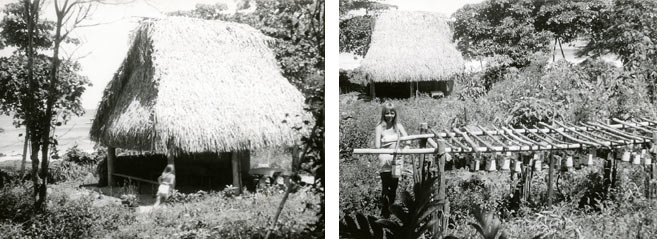
A particular friendship helped support some of these efforts. Karen Mogensen and Karen Olsen de Figueres, the wife of former president José Figueres Ferrer, were both born in Denmark and became friends. This relationship helped secure support for the early conservation efforts.
After several years of work, the project became a reality. On October 21, 1963, through Executive Decree No. 10, Cabo Blanco was designated an Absolute Natural Reserve. SINAC recognizes it as the first protected wild area in Costa Rica and Central America. Its creation also helped lay the foundations for the protected-area system that the country would develop in the following decades.
Cabo Blanco, a Refuge by the Ocean
Cabo Blanco Absolute Natural Reserve lies at the southern tip of the Nicoya Peninsula. Its territory encompasses terrestrial and marine ecosystems that form part of the same conservation area. The reserve protects forests where species from both humid and dry environments coexist. It also preserves areas of secondary forest that have recovered after decades of landscape transformation.
Among the trees found here are madroño, guácimo, jobo, gumbo-limbo, and guarumo. The reserve is also home to large trees such as pochote, kapok, and espavel. The area also preserves plant species with a more limited distribution on the peninsula.
The wildlife is equally diverse. Its forests are home to mantled howler monkeys, white-faced capuchin monkeys, deer, lowland pacas, armadillos, anteaters, raccoons, and white-nosed coatis. Wild cats have also been recorded, including ocelots, margays, and jaguarundis. Birds are another major attraction in Cabo Blanco. Numerous terrestrial and marine species have been recorded, while the coast and Cabo Blanco Island provide important sites for different bird species.
The island that gives the reserve its name lies off its southern tip. Its rocks, covered with deposits of guano, gave rise to the name Cabo Blanco, meaning “White Cape.” The site is used by various seabirds and forms part of the landscape that characterizes this area of the peninsula. Protection also extends to the marine environment. The reserve includes an area of ocean that helps conserve species associated with coastal ecosystems.
The Personal Cost of Conservation
The project undertaken by Wessberg and Mogensen was not easy. During those early years, protecting a forest could conflict with economic interests connected to the land.
Historical documentation from SINAC indicates that some people viewed conservation efforts as a threat to their interests. Similar tensions also surrounded efforts to protect other natural areas in the country.
In 1975, Nicolás Wessberg traveled to the Osa Peninsula to support efforts to protect the territory where Corcovado National Park would later be established. He was murdered during that trip. Different accounts have circulated about the circumstances of his death. SINAC documents indicate that, at the time its management plan was prepared, the person or people responsible for the murder had not been identified.
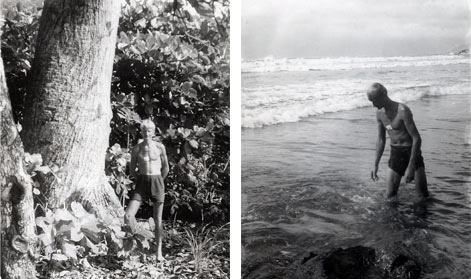
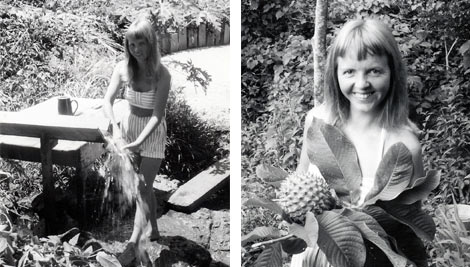
Wessberg’s death did not bring an end to the work he had begun with Karen. In 2025, 50 years had passed since his death, providing another opportunity to remember the role they both played in the early organized conservation efforts in Costa Rica.
Karen Mogensen Continued the Mission
After Nicolás’s death, Karen remained committed to conservation. Her financial situation became extremely difficult, even as she continued managing resources to maintain the areas she had helped protect.
According to SINAC documentation, she even turned her home in Montezuma into a small guesthouse to earn an income. She rented out the rooms while sleeping in a rear section of the house. Her financial difficulties were related, among other factors, to taxes and charges imposed on her properties.
Until her final years, Karen remained determined to ensure the permanent protection of the property where she had lived with Nicolás. Before her death in 1994, she arranged for the property to become a conservation heritage site under the administration of the Ministry of Environment and Energy (MINAE).
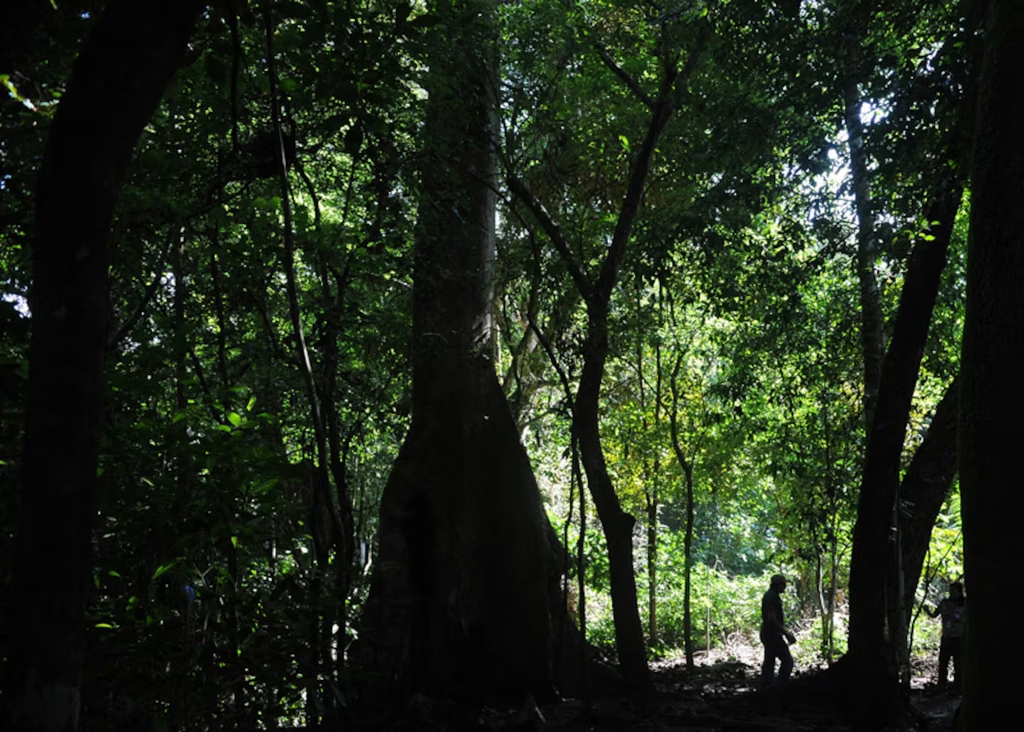
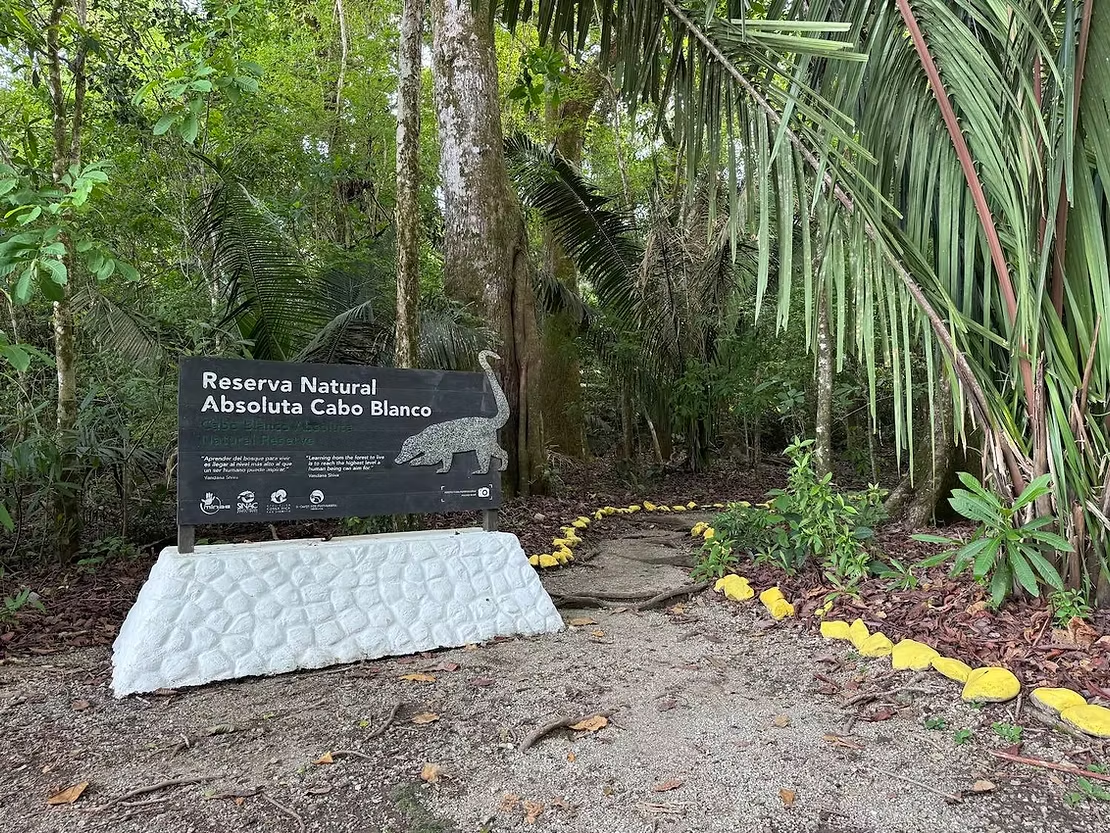
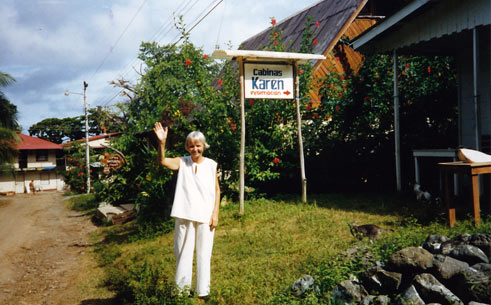
Today, this area is known as the Nicolás Wessberg Absolute Natural Reserve, named in honor of one of the main figures behind Cabo Blanco and the country’s early conservation efforts. SINAC maintains the reserve as part of Costa Rica’s national system of protected wild areas.
The Legacy Continues at Karen Mogensen Reserve
Karen’s work also led to the creation of another conservation area on the Nicoya Peninsula. The Karen Mogensen Reserve began to take shape in 1996 with the acquisition of the first 364 hectares by the Ecological Association of Paquera, Lepanto and Cóbano (ASEPALECO), with support from international organizations. Over the years, the protected area expanded to nearly 960 hectares, according to Foreste per Sempre.
The reserve protects regenerating forests and water sources that are important to local communities. It also serves as a space for environmental education, research, and ecotourism.
Its history shows that conservation involves more than simply declaring a territory protected. It also requires restoring forests, maintaining them over the long term, and working together with nearby communities.
Science to Understand the Forest
The conservation of the Karen Mogensen Reserve also incorporated a scientific component. Foreste per Sempre, an Italian organization that works with ASEPALECO, supported the creation of a biological and meteorological station in the reserve. The facility was inaugurated in 2014 and collects information on biodiversity, weather conditions, and environmental changes.
The station makes it possible to study the relationship between the forest and climatic conditions. It also supports research on species, forest regeneration, and ecosystem functioning. One of its objectives is to monitor the effects that climate change may have on biodiversity. Long-term weather data can complement biological research and help researchers understand how the forest changes over time.
The project also has an educational component. The station can serve as a site for university research, fieldwork, and activities for students and groups interested in conservation.
A Legacy That Lives On
The story of Nicolás Wessberg and Karen Mogensen is connected to a time when conservation did not yet have the prominent role it holds in Costa Rica today. Their work helped demonstrate that forests could have a value that extended far beyond their economic use. Cabo Blanco became a precedent for the later development of Costa Rica’s protected wild areas.
Today, Cabo Blanco continues to protect terrestrial and marine ecosystems on the Nicoya Peninsula. The Nicolás Wessberg Absolute Natural Reserve preserves another part of this legacy, while the Karen Mogensen Reserve keeps alive the name of the woman who continued defending conservation after her partner’s death.
More than six decades after Cabo Blanco was established, the vision of this European couple remains part of Costa Rica’s environmental history. Their names are associated with protected forests, research projects, and communities that continue to see conservation as a way to protect their natural resources.
Sensorial Sunsets