
The Virilla Tragedy: 100 Years Since the Worst Train Accident in Costa Rican History
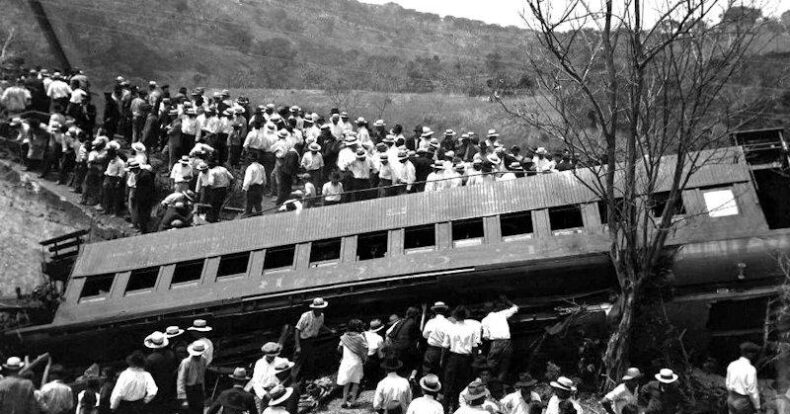

It was March 14, 1926, when a trip taken by residents of Alajuela and Heredia to Cartago turned into the worst railway tragedy in Costa Rican history.
A century after the disaster, revised figures put the death toll at 385, with another 93 people injured. The event remains etched in Costa Rica’s national memory as the Virilla Tragedy, as it occurred on one of the railway bridges spanning the river, at the point connecting Santo Domingo de Heredia and Tibás.
But the tragedy did not begin on the bridge. According to historical records, the disaster began to unfold as passengers boarded the train in Heredia, when high demand far exceeded the railway service’s normal capacity.
A charity excursion
The trip was intended for Cartago and was organized as part of a charity event. Father Claudio Volio organized the trip with the aim of raising funds for the local nursing home.
The call was a success, but that very success ultimately became one of the factors that exacerbated the outcome. A train from the Northern Railway Company was assigned for the transport; it departed from Alajuela and made stops in Heredia.
The number of people who tried to board was much higher than usual. Adriana Sánchez, a researcher at the University of Costa Rica, explained in a paper published in 2020 that, during regular service, the Northern Railway’s trains carried between 70 and 75 people per car, including some standing passengers.
That day, however, the turnout was much higher.
Normally, on regular services, Ferrocarril del Norte trains carried between 70 and 75 people per car, including some standing passengers. That day, however, there were around 100 people on board each car, and estimates suggest the number may have reached as many as 200 per car.
According to their estimates, this resulted in an excess of between 40 and 120 passengers per car. In addition, some 265 people were reportedly left behind because the driver did not stop at four stations, precisely due to the large number of passengers already on board the train.
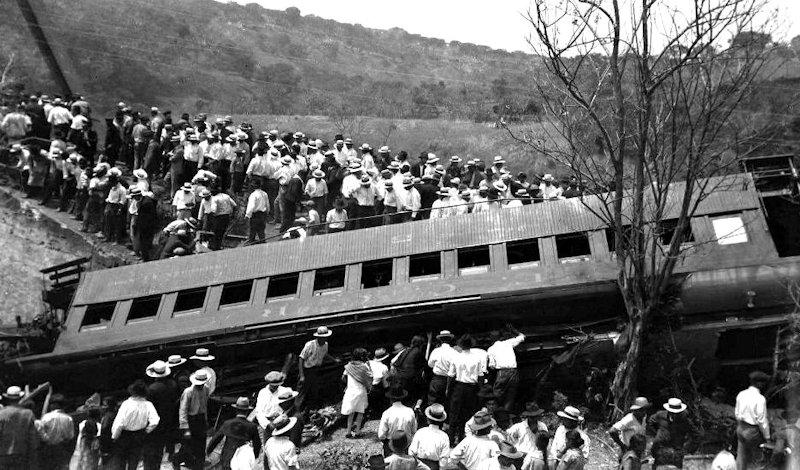
The overload made any maneuver along the route extremely difficult. A few kilometers later, that situation would have fatal consequences.
The critical moment on the Virilla Bridge
The tragedy occurred at 8:20 a.m. as the train was crossing the railway bridge over the Virilla River, on the border between Santo Domingo de Heredia and Tibás.
Based on statements reported by the press at the time and during the subsequent trial, the train conductor, Gonzalo Facio, described the difficulties he faced upon reaching that point along the route.
At the end of the bridge there was a slight incline. Given the extra weight the train was carrying, Facio decided to accelerate in an attempt to make it up the hill. That maneuver, combined with the overload, was a key factor in the accident.
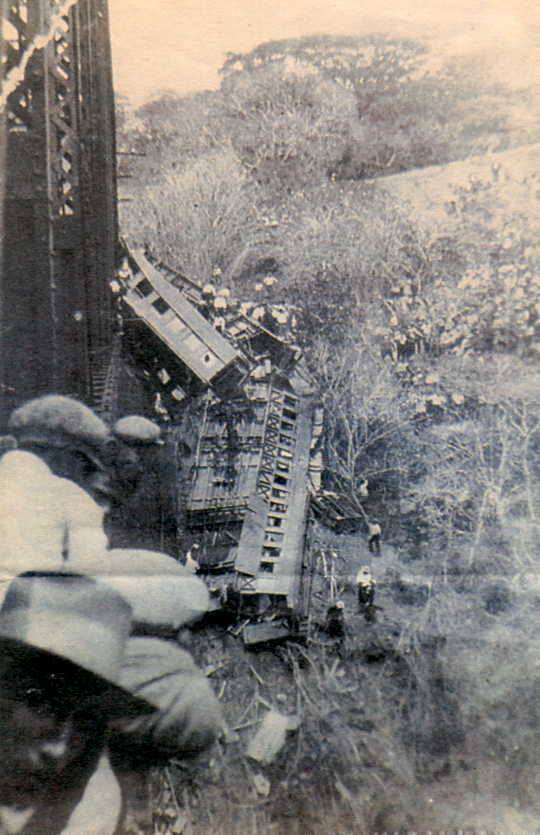
According to reports, the last three cars had not yet finished crossing the bridge when the train began to accelerate. Two of them fell to the bottom of the ravine, and a third became lodged in part of the structure.
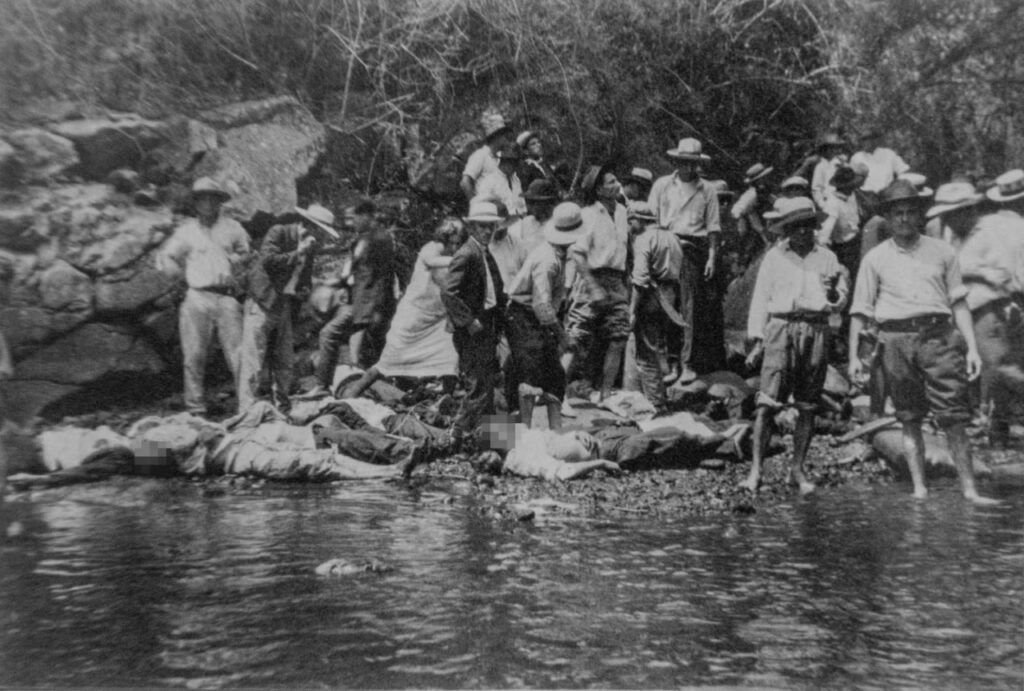
The impact was devastating. Initial reports put the death toll at 248, but the number rose over the following days as more bodies were recovered and some of the injured succumbed to their injuries.
National mourning and a lengthy legal process
The government at the time declared three days of national mourning. The scale of the accident shocked the country and dominated newspaper headlines.
On Monday, March 15, 1926, the newspaper La Nueva Prensa published the news of the disaster on its front page. That same day, the newspaper La Prensa captured the magnitude of the event with a phrase that reflected the nation’s shock.
It is one of the worst railway disasters the world has ever seen
La Prensa on March 15, 1926.
In the wake of the tragedy, a legal proceeding began that lasted more than a decade. That proceeding had two significant consequences for the history of public transportation in Costa Rica.
The first was a push toward greater professionalization of public transportation, following the investigations conducted in connection with the case. The second was the legal responsibility assigned to the railway company, which was found guilty by the Heredia Criminal Court.
A hundred years later, the Virilla Tragedy remains one of the deepest wounds in Costa Rican history. What began as a charity outing to Cartago ended up becoming the worst train accident in the country’s past, a tragedy marked by overloading, decisions made along the way, and the safety limitations of the time.
Sensorial Sunsets
Navigate articles